
The Gettysburg Address, delivered by Abraham Lincoln on 19 November 1863, takes first place for the way it transforms a commemorative occasion into an argument about continuing political responsibility. The text begins by locating the nation within a founding claim, considers a war that tests whether such a political project can endure and turns toward the work demanded of the living. Its small scale does not mean it asks a small question. The address makes remembrance active: honoring the dead is connected to what survivors must do, rather than treated as a ceremonial task completed by saying the appropriate words.
Begin with the movement through time. The opening reaches into the past, the central passage stands at the occasion of dedication and the ending projects a future whose achievement remains conditional on action. That progression gives the address a structure more substantial than its length might suggest. It does not merely list past, present and future. It asks how a principle inherited from the past can survive a present test through commitments made for the future. The reader therefore encounters a political argument about continuity and obligation, not simply an expression of grief or gratitude at a cemetery.
The argument and its structure
The relationship between words and deeds gives the middle of the address its striking tension. A speaker at a public ceremony emphasizes the greater significance of what others have done. This can sound like the withdrawal of rhetoric, yet it is itself a carefully constructed rhetorical move. It changes the standard by which the ceremony is to be judged. The audience should not imagine that eloquence alone completes the act of honoring. The speech’s effectiveness depends on redirecting attention from the speaking occasion toward the unfinished work that gives the occasion its political meaning.
The address also changes who carries the immediate burden. The dead are honored, but they cannot undertake the work now required. The living must decide what commitment will make remembrance more than an expression. This shift is the reason a close reading should resist treating the ending as a timeless decorative slogan. Its language connects political survival with an obligation held by people who can still act. One may question how the argument defines the nation or how its aspirations relate to realities of exclusion, but those questions should engage the whole structure rather than only the familiarity of the final cadence.
The ranking and a second reading
Our first-place decision is editorial, not a claim that every other address is less consequential or that Lincoln’s words themselves secured the outcome of the war. The Second Inaugural has the stronger case for sustained moral complexity, while Roosevelt offers a more explicit argument for institutional action. Gettysburg wins under our criteria because its transitions are unusually economical: historical principle becomes present trial, and commemoration becomes a demand for future conduct. A reader can follow the argument quickly and still find the relationship between its parts worth reconsidering. That combination of accessibility and depth is difficult to achieve in any political form.
For a final reading, identify the point at which the subject changes from what the ceremony can do for the dead to what the living owe the political project around them. Then ask whether that transition persuades you, rather than simply admiring its reputation. The Library of Congress preserves several manuscript versions, so an exact quotation should be checked against the version being cited instead of assuming every printed wording is identical. This guide does not rely on an exact total word count to establish greatness. After reading all ten addresses, does compression still deserve the highest place, or would you put moral complexity, a concrete program or a warning about power first?
Source: Original text / archival record 1 · Original text / archival record 2.
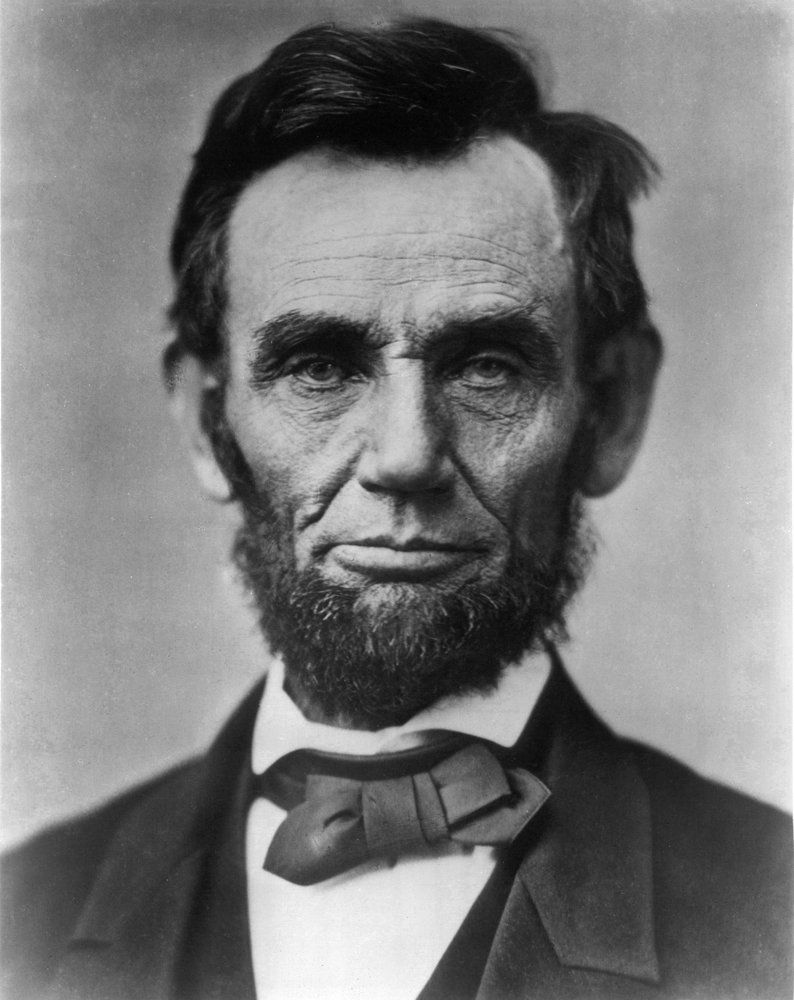
Photo: Alexander Gardner; existing digital adjustments by Scewing · Public domain. Abraham Lincoln, Alexander Gardner portrait, 8 November 1863; existing Scewing digital corrections retained; context image, not a photograph of the ranked address being delivered. Source frame and existing corrections retained; resized/recompressed without new crop, colorization or AI enhancement.
