
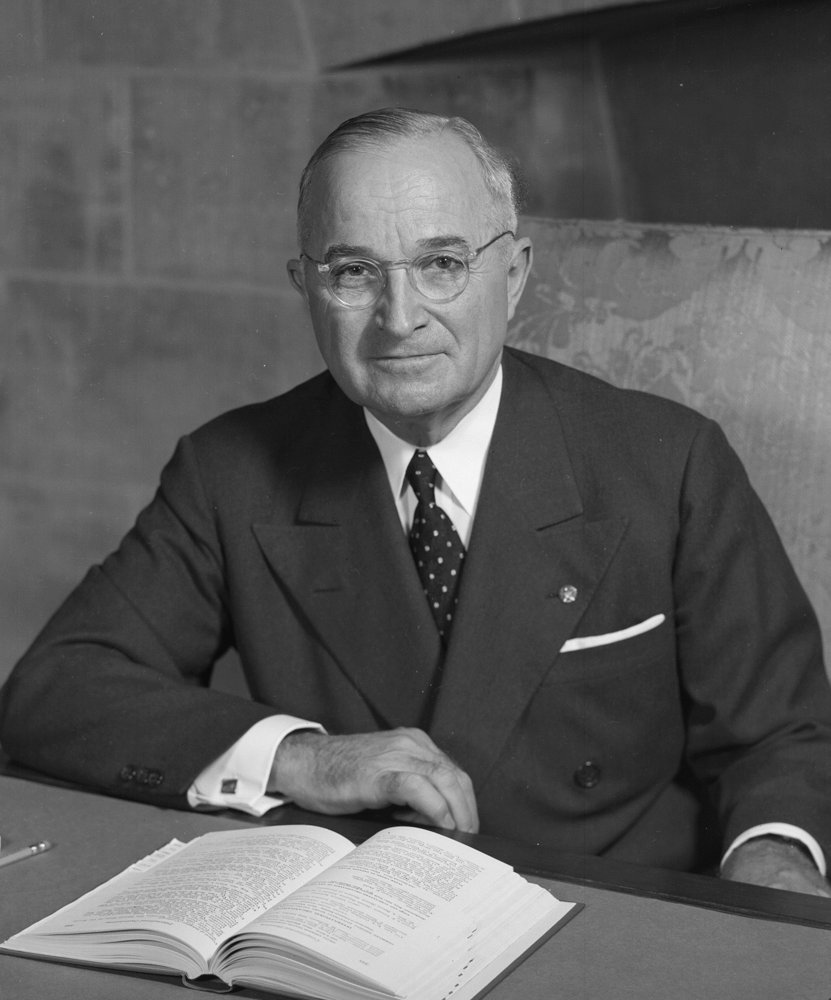
Harry Truman’s message to Congress on 12 March 1947 begins with Greece and Turkey and develops into a broader statement of American foreign-policy responsibility. That movement gives the address its distinctive place in this ranking. It is not only a ceremonial declaration of values: it asks legislators for authority and assistance. The speech therefore permits a reader to examine how a president connects a concrete request with a general account of national interests. Its importance as an argument lies in the bridge between the particular cases presented and the much wider principle the speaker asks Congress to accept.
Start by noticing whom Truman addresses. Congress is not simply an audience invited to applaud. It is the institution being asked to authorize the proposed course. The address describes needs, explains why the United States should respond and eventually specifies the assistance requested. This structure makes it useful for distinguishing presidential rhetoric from presidential power. A speech can advocate, frame and persuade, but the request itself acknowledges that another branch must act. Reading the message only through the later label Truman Doctrine can obscure the specific legislative transaction around which the original address is organized.
The argument and its structure
The central transition occurs when the discussion broadens from the two countries to competing ways of political life and the conditions of international peace. The cases are made to stand for a larger choice. That can give an argument force by showing why an apparently distant decision matters to the audience. It can also make the audience’s choice seem more binary than the circumstances warrant. Both possibilities deserve attention. Describing the speech’s framing is not the same as accepting every claim it makes about other countries. Historical actors remain subjects whose circumstances require evidence beyond a president’s account of them.
The address also connects material assistance with political stability. It presents economic conditions and security as related rather than separate policy compartments. That relationship helps the speaker explain why aid is more than a charitable gesture. A reader can test the argument by asking where the causal link is asserted and where it is demonstrated. The full text provides more to examine than a short excerpt about supporting free peoples, including concern for administration and supervision. Those practical passages matter because they expose the distance between announcing a purpose and deciding how a program would operate after authorization.
The ranking and a second reading
We rank the message eighth for the clarity of its progression from particular needs to general principle and back to a concrete request. It could rank higher for readers who want a speech to perform an identifiable institutional task. The opposing case is that its broad division of political alternatives can reduce space for complexity and competing explanations. That tension is part of the reading value rather than a reason to declare the entire text either self-evidently right or wholly meaningless. Our judgment does not endorse every later policy associated with its label, nor attribute a whole era of international relations to one congressional appearance.
On a return, identify three separate things: the conditions Truman describes, the rule he proposes for responding and the authority he requests. Then ask whether the evidence offered for the first fully supports the breadth of the second and the scale of the third. The exercise makes a familiar doctrine into a readable argument whose steps can be challenged individually. It also keeps the distinction between an appeal and its consequences intact. Decisions after the speech involved additional institutions and actors. Is the address most persuasive when discussing two specific countries, or when asking its audience to accept a wider responsibility beyond those immediate cases?
Source: Original text / archival record 1.
Photo: Unidentified photographer; NARA / US Army Signal Corps collection · Public domain. Harry Truman, historical NARA/Army Signal Corps photograph; capture date not established; context image, not a photograph of the ranked address being delivered. Source frame and existing corrections retained; resized/recompressed without new crop, colorization or AI enhancement.
