
Abraham Lincoln’s Second Inaugural of 4 March 1865 refuses the easy shape of a victory speech. It looks back over a civil war while declining to turn the speaker’s favorable military position into a simple claim of moral self-sufficiency. That choice gives the address its exceptional weight. The text identifies slavery as central to the conflict and asks how suffering, responsibility and the limits of human understanding should affect what comes next. Its famous conclusion is more demanding when read as the result of that argument, rather than as a detached recommendation to be kind after a disagreement.
The opening establishes a different task from the first inauguration. Lincoln explains why a detailed account of policy is less necessary now, then moves toward the origins and meaning of the conflict. The brevity of that transition matters. Instead of reviewing every action of the administration, the address makes room for a question about how both sides entered a war whose course exceeded their expectations. The reader should notice that acknowledging misjudgment does not require treating all purposes as morally identical. The text can distinguish the struggle over slavery while also resisting a story in which one group fully comprehends the consequences of its own actions.
The argument and its structure
The address’s treatment of slavery prevents the conclusion from becoming an abstract appeal to reconciliation with no account of wrong. Its moral difficulty lies in holding judgment and restraint together. A reader who remembers only the closing phrases may miss the historical burden that precedes them. The language of responsibility is not merely decorative preparation for an uplifting ending. It changes what healing would have to mean. Repair cannot be understood simply as forgetting how the conflict began or substituting agreement about the future for an examination of the conditions that made the war possible.
Religious language supplies another demanding element. Lincoln considers the fact that opposing sides can appeal to the same divine authority without claiming that such appeals make their positions equally justified. The address also questions confidence that human beings can know the full purpose of suffering. These are arguments within the text, not propositions this guide asks every reader to adopt as religious belief. Their rhetorical role is to limit triumphal certainty. The speaker’s position becomes less that of a victorious interpreter announcing complete knowledge, and more that of an officeholder asking what duties remain when certainty about ultimate meaning is unavailable.
The ranking and a second reading
Second place is a narrow decision. Readers who value moral complexity above compression can make a strong case for putting this address first. Its greatest advantage over Gettysburg is the directness with which it confronts responsibility while preparing for the work of care and reconstruction. The competing case is that its theological reasoning asks more interpretive work of a reader and depends more heavily on its particular wartime moment. Our ranking treats that difficulty as a source of value, not a defect to be removed. It remains below Gettysburg only because the shorter address joins occasion, history and future obligation with extraordinary economy.
On a return, read backward from the conclusion. What earlier claims make its proposed conduct necessary, and which prevent it from becoming sentimental? Then read forward again and see how the ending changes. This method tests whether the famous passage can bear the moral weight placed on it. It also keeps the address from becoming a general-purpose quotation applied without regard to who was harmed or what repair requires. Would you give first place to this effort to combine accountability with restraint, or to Gettysburg’s more concentrated transformation of public remembrance into a demand on the living?
Source: Original text / archival record 1.
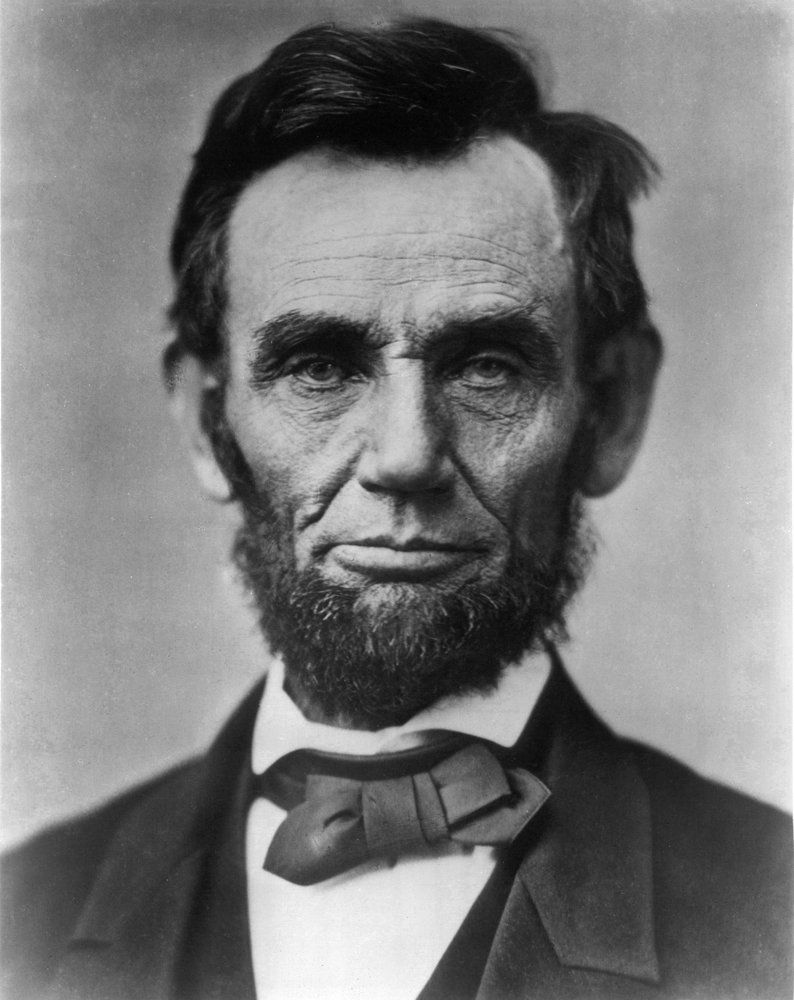
Photo: Alexander Gardner; existing digital adjustments by Scewing · Public domain. Abraham Lincoln, Alexander Gardner portrait, 8 November 1863; existing Scewing digital corrections retained; context image, not a photograph of the ranked address being delivered. Source frame and existing corrections retained; resized/recompressed without new crop, colorization or AI enhancement.
