
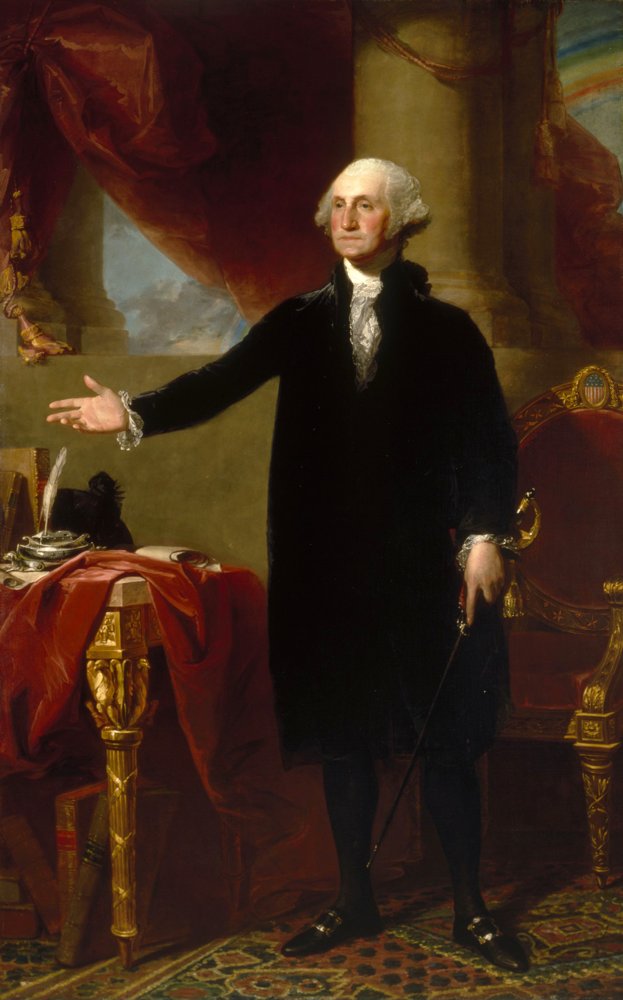
George Washington’s Farewell Address entered public life in print on 19 September 1796. He did not publicly deliver it as a speech. That distinction is more than a small correction to a familiar title: it changes how we should imagine the encounter between speaker and audience. The address could be reread, circulated and encountered outside one ceremonial gathering. Its immediate task was to announce withdrawal from presidential contention, yet it expanded that personal decision into advice about the political relationships on which the republic’s survival depended. A departure became an opportunity to define what should continue after the departing officeholder was gone.
The opening frames retirement through the relationship between personal inclination and public duty. Washington explains his decision while insisting that withdrawal does not mean indifference to the country. That prepares the transition from a statement about himself to an account of collective obligations. The text’s authority partly rests on the speaker’s position, but a careful reader should still examine the reasons rather than treating prestige as proof. Read as a whole, the address also defends an administration and expresses a political outlook. It is political argument, not a voice floating above every contemporary disagreement.
The argument and its structure
Union supplies the central organizing concern. The address asks people to consider what they gain through a larger political association and what might be lost through sectional hostility or faction. Its method is to connect shared interest with habits that can either sustain or weaken it. That is a broader task than endorsing a particular officeholder. A reader can ask when appeals to common identity help explain interdependence and when they risk making disagreement itself appear disloyal. The address becomes more useful when those possibilities are examined separately instead of assuming that every call for unity has the same meaning.
The discussion of foreign relationships is another place where a short summary can mislead. The text should not be reduced to an instruction that the United States must never interact with other countries. The original text distinguishes permanent attachments from temporary associations for extraordinary emergencies. Reading the actual argument requires attention to the conditions under which relationships are judged, not simply a slogan about avoiding the world. This makes the address a lesson in how qualifiers matter. Removing them may produce a memorable maxim while changing the proposition the document actually advances.
The ranking and a second reading
Third place reflects the address’s unusual combination of a personal transition, an institutional warning and a durable set of questions about political loyalty. A reader who values the practical discipline of a shorter address may find it too expansive and prefer either Lincoln text. Others may rank it first because its concerns extend beyond a single crisis or a new administration’s opening program. Our criteria favor its ability to invite repeated examination, while recognizing that its authority can encourage uncritical reverence. The value of studying it lies in testing the argument, not assuming that a founding-era text automatically resolves every later dispute.
For a final reading, separate three voices: the officeholder defending a decision, the citizen explaining retirement and the political adviser warning about future conduct. Ask when they reinforce one another and when their interests might differ. The exercise restores complexity to a document often remembered through abbreviated advice about factions or alliances. Its continuing life does not make every historical situation equivalent to 1796. Applying one of its warnings elsewhere requires evidence about the new circumstances and a reasoned comparison. Would you place it above the inaugurals for the breadth of its concerns, or below them because breadth makes its advice harder to translate into a specific decision?
Source: Original text / archival record 1 · Original text / archival record 2.
Photo: Gilbert Stuart · Public domain. George Washington, Gilbert Stuart Lansdowne portrait, 1796; context image, not a photograph of the ranked address being delivered. Source frame and existing corrections retained; resized/recompressed without new crop, colorization or AI enhancement.
