
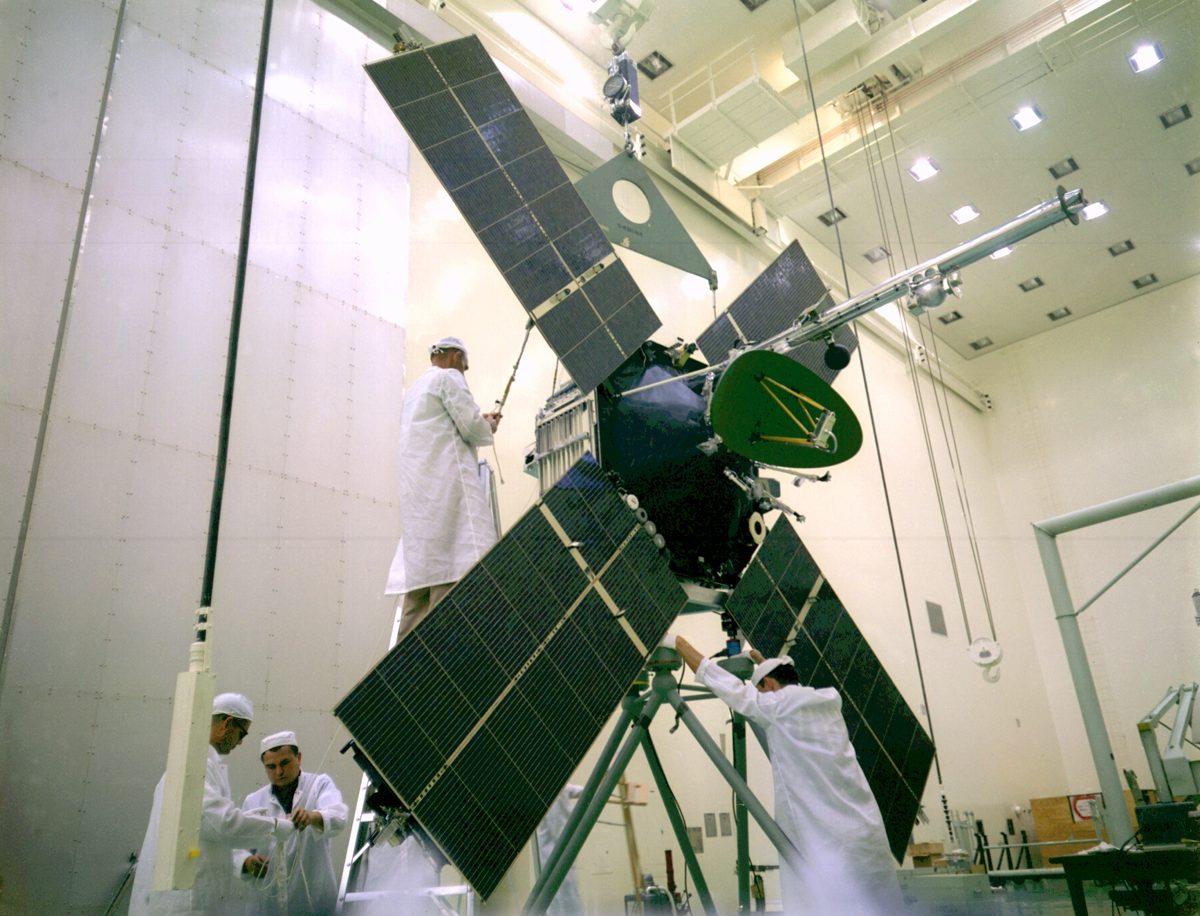
Mariner 4 ranks tenth because it provides a particularly clear beginning to robotic planetary exploration. Launched in November 1964, it flew past Mars in July 1965 and returned the first close-up photographs of another planet from deep space. The small, monochrome views revealed cratered terrain very different from many popular expectations. The historical importance is not that a handful of pictures completed the story of Mars. It is that a spacecraft replaced distant speculation with measurements gathered near the world itself. The distinction makes this mission a useful introduction to both the power of direct observation and the danger of asking limited coverage to answer everything.
A flyby is a selective encounter. The camera sees a route across a planet rather than every location under every condition. That should shape the words used to describe the result. Cratered terrain in the returned images is evidence about the terrain photographed; it is not permission to assume that all Martian landscapes are identical. A beginner can make a simple exercise from that limitation. Separate what the image visibly records, what its caption explains and what a later account concludes. Keeping those layers distinct makes the first photographs more interesting, because you can appreciate what became knowable without pretending that later discoveries had already been made.
First views, limited coverage
The mission also makes digital imaging tangible. NASA's history describes engineers producing an early hand-colored rendition from numerical image data while waiting for formal processing. The famous paper reconstruction is not a color photograph of Mars. It illustrates how an image can be built from transmitted values, with choices about the way those values are displayed. That is an excellent starting point for understanding modern planetary pictures too. A smooth, colorful image may look effortless, yet it still rests on instruments, radio communication and processing. The older, visibly assembled example exposes that chain instead of allowing it to disappear behind a polished final picture.
Compare Mariner 4 with the later Viking surface work in this list. The former moves past Mars; the latter includes instruments situated on the ground as well as orbital observations. Those designs answer overlapping but different questions. A passing camera can reveal large terrain patterns within its view, while a landed instrument can connect a measurement to material at one site. The progression is not a simple replacement of primitive work by perfect knowledge. Each mission has a perspective and a boundary. Asking which question requires which viewpoint helps explain why exploration develops through several kinds of spacecraft rather than one universally ideal machine.
Read the encounter in context
When reading the archive, preserve the date and the kind of image. A later colorized representation, a spacecraft photograph and an early data reconstruction may appear together in a modern story, but they are not interchangeable records. The hardware image accompanying this entry introduces the mission's earthly preparation. It does not depict Mariner 4 hovering beside Mars or taking a selfie during the encounter. That labeling matters because the engineering work is already impressive without an invented viewpoint. You can follow a real chain from an assembled machine to a measured signal and then to a view that changed the questions people asked about another world.
Tenth place recognizes a foundational breakthrough whose scope was narrower than the prolonged investigations above. It can be your first choice if you want to understand how planetary imagery became evidence rather than illustration. Start with the limited photograph, then ask what observation you would request next. That question naturally leads toward orbiters and landers without diminishing the first encounter. Mariner 4's lasting lesson is methodological: learning begins when a measurement changes an expectation, but responsible interpretation keeps the measurement's limits visible. The mission opened a door to Mars; it did not need to close every debate on the other side to earn a place here.
Photo: Mariner 4 prepared for a weight test, 1 November 1963. NASA/JPL-Caltech · Public domain. Resized and recompressed without cropping; source license retained.

