
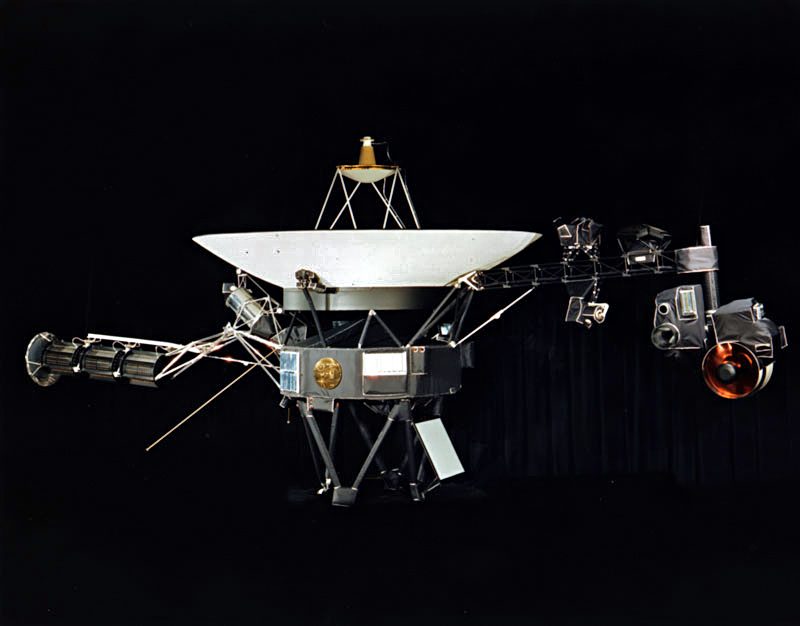
Robotic missions changed the Solar System from a collection of distant points into places with weather, landscapes, chemistry and histories that can be investigated. This Top 10 offers a route through that transformation, concentrating on NASA-led planetary missions and their international partners. It covers flybys, orbiters, landers and a rover; the Viking pair and Voyager pair each count as one mission program. Crewed exploration, Earth-observing satellites and astronomical observatories are outside the scope. Facts were checked on 19 October 2026. The order is an editorial guide to scientific reach, enduring changes in understanding and the usefulness of the surviving records for an interested beginner.
Voyager ranks first for the breadth of its planetary journey and its later measurements beyond the heliosphere. Cassini-Huygens is the strongest alternative for detailed exploration of one complex planetary system, while Curiosity offers the most approachable long-form investigation of an ancient environment on the ground. These priorities do not measure discoveries with a fabricated score. A brief pioneering encounter can matter enormously without receiving the same rank as a mission that returned repeatedly to several questions. We also distinguish a mission's historical success from a claim that it remains operational today. An archive can continue teaching long after the spacecraft has stopped communicating.
How we compare the missions
Search evidence helped identify useful reader questions. Google Trends Explore, inspected on 19 October 2026 for the United States, past ninety days, all categories and Web Search, showed pale blue dot rising by 140% among queries related to Voyager spacecraft. Cassini launch and completion queries appeared as Breakout. These are relative search signals, not monthly volumes or votes for this order. Unrelated or sensational queries were not adopted as scientific evidence. The official current pages supply separate context: Viking's fiftieth landing anniversary falls in 2026, and Curiosity's mission page reports an elevation milestone in August. Search interest and verified mission history serve different purposes.
Three distinctions make the countdown easier to use. A flyby samples a world along a moving path; an orbiter can revisit it; a lander or rover connects measurements to a particular surface setting. None is automatically better for every question. Likewise, an image records information through instruments and processing, while a conclusion may combine several kinds of data. Finally, a potentially habitable environment is not a discovery of life. Several missions here changed how scientists frame that possibility, but a beautiful landscape, organic chemistry or inferred ocean should not be presented as a photograph of organisms. The strength lies in what the observations actually establish.
Choose your route through the evidence
Begin with a comparison rather than trying to memorize ten launch dates. Put Mariner 4 beside Viking to examine the move from passing a planet to working on its surface. Put Pioneer 10 beside Galileo to consider the move from first reconnaissance to repeated study. Compare New Horizons with Dawn to see why a small world can reward either a carefully planned encounter or a prolonged orbital investigation. These pairings make engineering choices part of the scientific story. They also show why ranking by distance alone would overlook some of the most revealing missions, and why the nearest-looking surface can still hold unanswered questions.
The photographs and visualizations are labeled according to what they show: hardware on Earth, processed planetary views, image mosaics or an artist's representation. They are not views taken by a camera following a spacecraft through deep space. Follow the primary mission links for dates, instruments and the context of each result. Our guide to the Solar System's largest moons provides useful background for Galileo, Cassini and Voyager. A rewarding reading session ends with a sharper question: which observation changed an interpretation, and what remains uncertain? Would you start with Voyager's breadth, Cassini's depth, Curiosity's ground-level geology or one of the pioneering missions that made those approaches possible?
Source: Google Trends · NASA · NASA.
Photo: Voyager hardware; NASA archive, 1977. NASA/JPL-Caltech · Public domain. Resized and recompressed without cropping; source license retained.

