
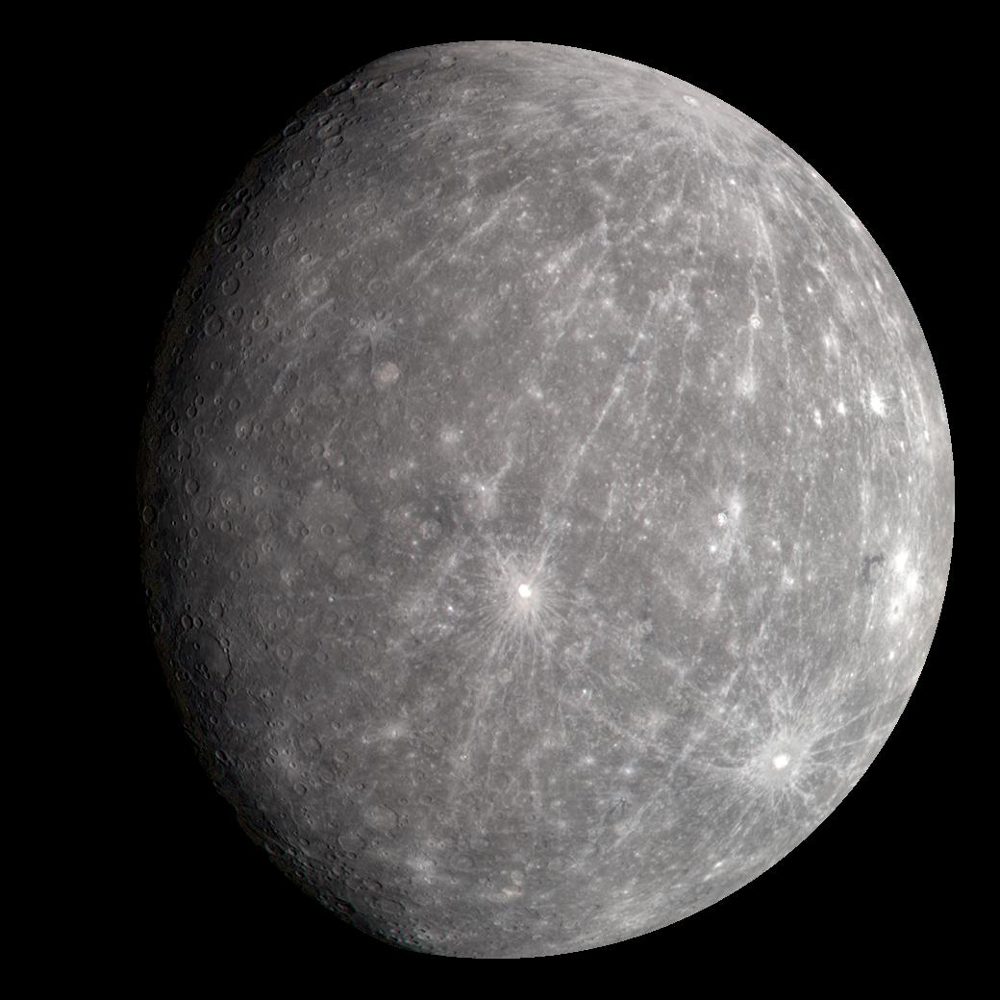
MESSENGER takes seventh place for transforming Mercury from a world visited briefly into one investigated from orbit. Launched in 2004, it entered Mercury orbit in 2011 and studied the planet for more than four years before its mission ended in 2015. NASA's account highlights surface composition, geological history, magnetic-field measurements and polar deposits dominated by water ice. That range makes it a useful counterexample to judging a planet by an apparently simple, cratered appearance. A small world close to the Sun can sustain several different scientific questions, and an orbiter can connect them through repeated observation rather than treating each photograph as a separate curiosity.
The polar ice result is especially good for learning how scientific expectations become more precise. Mercury's proximity to the Sun does not mean that every point on its surface experiences identical illumination. The relevant question concerns conditions at the locations studied, not a single temperature assigned to an entire planet. Follow the official explanation of the evidence rather than replacing it with a sensational phrase about ice on a burning world. That approach lets an apparent contradiction become an investigation. It also demonstrates why an interesting result often depends on geography and measurement: the where and the how matter as much as the name of the material detected.
From flybys to sustained study
An orbital mission changes what a map can do. Repeated passes allow measurements of different regions and opportunities to combine images with other instruments. A photographic mosaic becomes more informative when linked to composition or magnetic information, but those layers are not simply things the eye sees directly. Ask what each instrument actually measures and how the mission team uses the measurements together. You do not need advanced equations to keep the distinction clear. The important habit is to resist treating every colorful planetary image as ordinary eyesight. Some colors approximate appearance, while others emphasize differences that would otherwise be difficult to compare.
Mercury also makes arrival part of the story. Reaching a planet's neighborhood and slowing into a useful orbit are different tasks. MESSENGER's extended route used planetary flybys before orbital work began. The journey should not be mistaken for years of uninterrupted close-up mapping. A timeline separates launch, approach, orbital operations and the end of the mission. For a beginner, those phases explain why a spacecraft that seems to be headed toward a nearby planet can still require a complicated voyage. The question is not merely the straight-line distance on a drawing, but how the machine reaches the location and motion needed for its scientific work.
Interpret the map and the mission’s end
Read the image caption and preserve its processing description. A Mercury view assembled from spacecraft observations is a product built to communicate measured information; it is not a photograph of the spacecraft itself above the surface. The mission links help connect that view with the instruments and dates behind it. If you want a manageable exercise, choose one region and ask what a picture establishes about shape, then what an additional measurement could establish about material or environment. This turns a visually familiar cratered world into a set of testable questions without inventing a landing, a sampled rock or a discovery that the mission never claimed.
Seventh place rewards the depth of that orbital transformation while reserving higher positions for broader or especially influential investigations. MESSENGER could be your favorite if you enjoy cases where a seemingly straightforward planet becomes unexpectedly complex. Compare it with Dawn: both use orbital perspectives, but their targets and scientific comparisons differ. Or compare it with Mariner 4 to see how an encounter and a sustained orbital mission frame different claims. Its lasting contribution to this guide is a lesson in specificity. A planetary name is not an explanation; repeated measurements of particular places and processes make the explanation possible.
Source: NASA.
Photo: MESSENGER processed Mercury view, 6 October 2008. NASA/Johns Hopkins University Applied Physics Laboratory/Arizona State University/Carnegie Institution of Washington · Public domain. Resized and recompressed without cropping; source license retained.

