
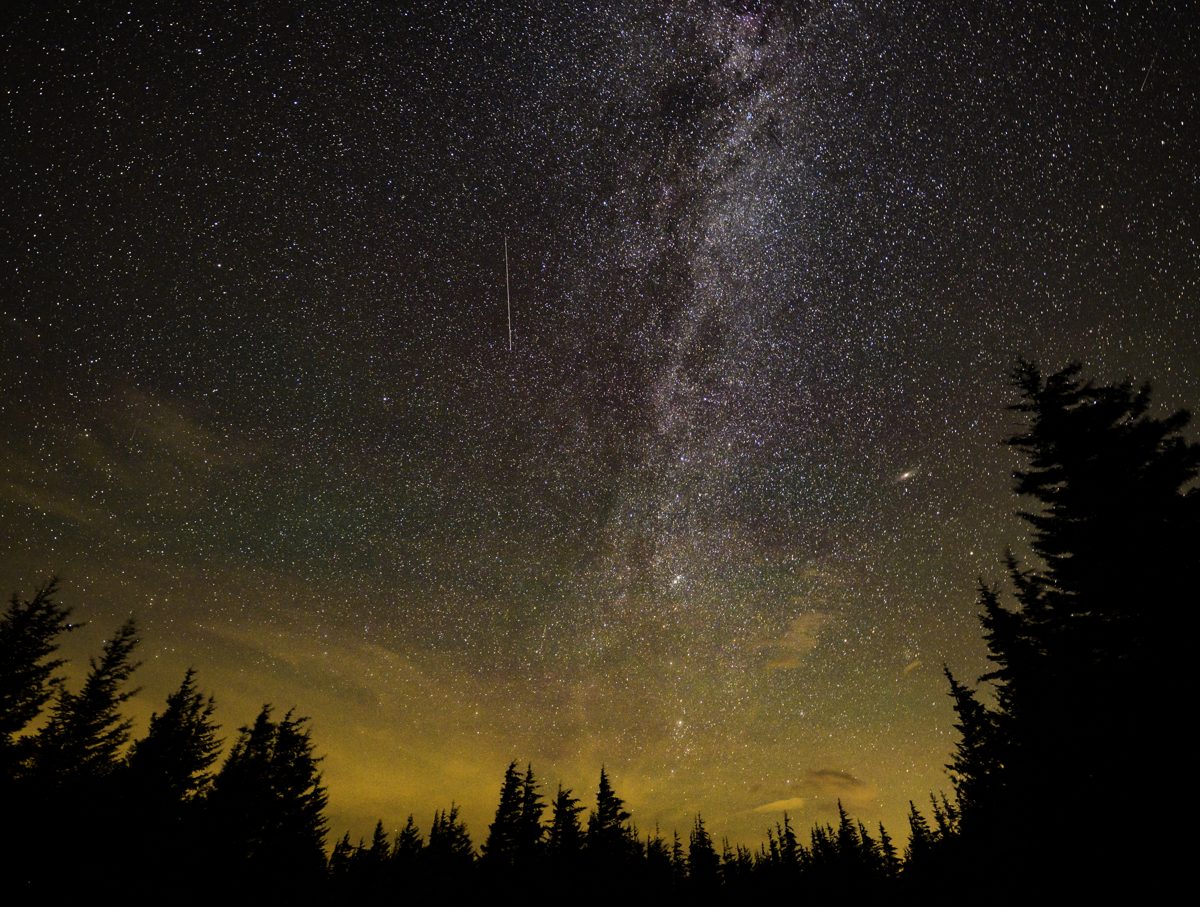
A genuinely dark sky is the most broadly useful improvement available to many meteor watchers. NASA explains that artificial light scattered through the atmosphere brightens the background and hides faint celestial objects. The effect can remain even where the ground around you feels dark. A street with no lamp immediately overhead may still sit beneath substantial urban skyglow. Choosing a better observing environment therefore means looking beyond whether your own face or chair is illuminated. Evaluate the sky you will watch, including the brighter horizons surrounding the site.
Begin by comparing realistic places you can reach and use. A light-pollution map can help identify possibilities, but it does not confirm current access, parking, opening hours or an unobstructed view from a particular spot. Check those separately. A familiar permitted location with a broad sky can be easier to use than an impressive-looking coordinate you have not examined. The aim is not to travel as far as possible or find a place that sounds adventurous. It is to improve the viewing conditions while preserving a workable plan for getting there, settling in and returning.
Inspect the actual spot
Inspect the landscape as well as the map. A dense stand of trees, a narrow hollow or nearby buildings can remove large parts of the visible sky. A clearing, open shore or broad field may offer a more useful view if you are allowed to be there. Scout an unfamiliar place in daylight when possible, as NASA recommends. Look from the position where you intend to sit, not only from the road or car park. That can reveal an obstruction or light source that a general photograph of the location failed to show. Good preparation happens at the scale of the actual observing spot.
Separate nearby glare from the wider glow. Turning a chair away from one lamp can improve immediate comfort, while moving to a darker general area can reduce the background over a much larger field. Both changes may help, but they do different jobs. If a city brightens one horizon, another direction may be more useful, provided the shower and the available view make it suitable. Do not assume that a dark patch of ground means every direction is equally good. Once on site, take a deliberate look around before deciding which part of the sky deserves your attention.
Compare the whole situation
Darkness works together with moonlight, cloud and timing. A remote site under a bright Moon or an overcast sky does not automatically outperform a nearer site during a genuinely useful clear interval. Compare the whole situation rather than worshipping one map score. Keep the goal modest and specific: improve what you can actually see during the session available to you. NASA's guidance provides general principles, while your notes establish what happened in your particular circumstances. Neither a photograph nor a reputation can guarantee that the same place produces the same experience on every future visit.
This is our first-ranked tip because improving the sky background supports every minute of attentive watching. It is also a lesson you can reuse for other kinds of astronomy. After the outing, note the directions affected by light, the obstacles you encountered and whether access worked as expected. Those observations can help you choose more intelligently next time without buying another instrument. A successful location is one that joins a useful sky to a practical, permitted visit. Which change would most improve your usual spot: less nearby glare, a wider view, a darker horizon or a better observing interval?
Source: NASA.
Photo: Perseid Meteor Shower NHQ202108100009 · NASA/Bill Ingalls · NASA media guidelines. U.S. government work; resized and recompressed.