
A meteor shower is one of the most approachable ways to begin exploring the night sky. You do not need to identify dozens of constellations or learn a telescope's controls before taking part. What you do need is a useful combination of darkness, clear sky, a suitable time and enough attention to notice brief events. This guide explains ten decisions that shape that combination. It is intended for ordinary visual observing, whether you are planning a first outing or trying to understand why a previous attempt felt disappointing.
A meteor is the luminous phenomenon produced when material from space enters the atmosphere. A meteor shower occurs when Earth encounters a stream of debris, often associated with a comet. The familiar streak is therefore an atmospheric event, not a star falling out of its constellation. NASA identifies Halley's Comet as the parent of the Orionids. That connection does not mean you must find Halley's Comet in the sky to watch the shower. Understanding this distinction removes one common source of confusion before the practical planning begins.
How this ranking works
The ranking puts choices that affect visibility ahead of conveniences. A genuinely dark location leads, followed by checking clouds and moonlight. Comfortable seating still matters, but it cannot compensate for a sky hidden by cloud. This is an editorial order rather than a formula that assigns a measurable increase in meteors to each action. Conditions interact: your best available location might be less dark but have a clearer view, or a useful observing window might begin only after the Moon sets. The point is to compare real options rather than pursue an ideal checklist mechanically.
NASA's October 2026 guide lists the Orionid peak for the night of 21–22 October and recommends considering the hours before dawn after moonset. Those details provide a timely example, checked on 16 October 2026. They do not establish one universal departure time. Local darkness, the radiant's position, Moon rise and set times, access and weather still determine the window you can actually use. A date copied from a calendar should begin your planning, not replace the rest of it. The individual pages explain how to make those checks useful.
Plan a realistic outing
Before leaving, write down the shower name, your intended location, the local observing interval and an alternative if conditions deteriorate. Decide whether the goal is casual watching, a simple personal count or photography. These activities can share a night without being identical. If you spend much of the session operating a camera, your personal visual count will not describe continuous observing. If you want quieter targets while waiting, our binocular stargazing guide offers a separate activity. Return to a wide, unaided view when your attention returns to meteors.
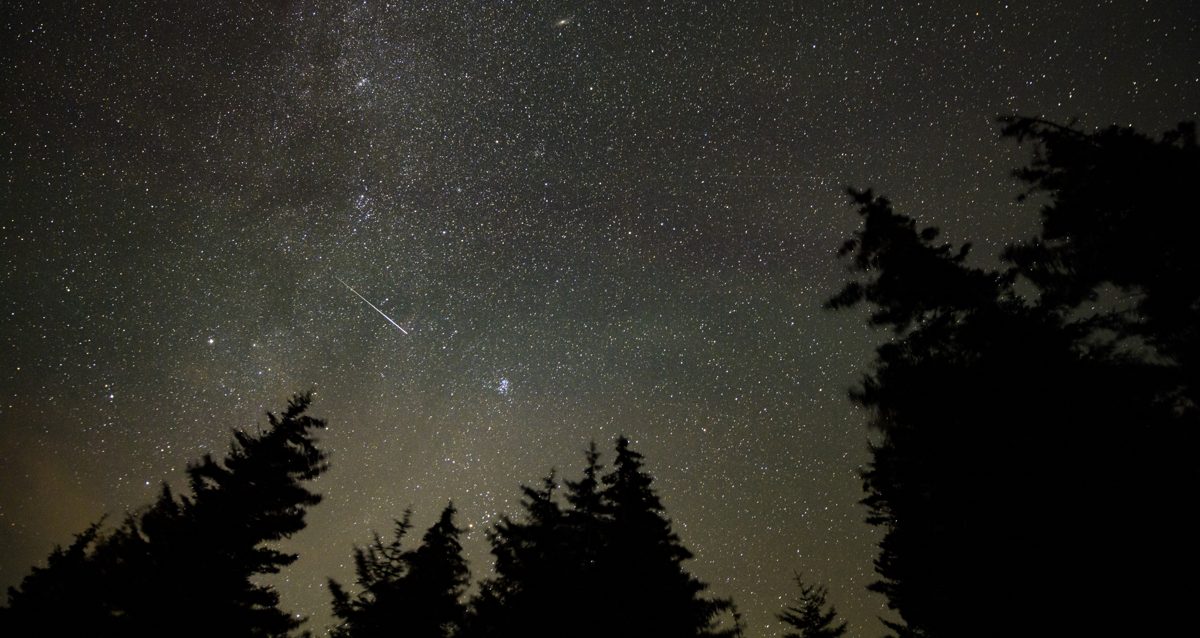
Finally, keep photographs and forecasts in their proper roles. The archive Perseid images accompanying this guide retain their original 30-second exposures. They illustrate real meteors and their setting, but they are neither pictures of the 2026 Orionids nor promises about a momentary naked-eye view. A successful outing is one in which you understand the conditions, use your available time thoughtfully and leave with observations you can describe honestly. Seeing fewer meteors than a headline suggested can still teach you something valuable about the sky and how to plan the next attempt.
Source: NASA · NASA: meteors and meteorites.
Photo: Perseid Meteor Shower NHQ202108110003 · NASA/Bill Ingalls · NASA media guidelines. U.S. government work; resized and recompressed.