
A shower's peak date is a starting point for planning, not a universal local appointment. The American Meteor Society explains that useful viewing depends on the shower, the observer's location, darkness and the radiant's height. Many showers favor hours after midnight, but a generic instruction to go out late cannot answer every case. Before choosing a time, identify the named shower and the source of the date. A seasonal activity period, a predicted maximum and a recommended local observing interval describe related but different things.
First decide whether the relevant part of the sky is available from your location during darkness. A radiant below the horizon does not become favorably placed simply because a calendar says the shower is active. A high radiant during daylight is not a useful visual opportunity either. You need an overlap between an appropriate sky position and a dark sky, then you can examine moonlight and clouds within that overlap. Thinking in terms of a usable window is more helpful than trying to choose a single magic minute that supposedly works everywhere.
Check the time convention
Check the time convention used by the source. Some astronomical material uses Coordinated Universal Time, abbreviated UTC; local clocks may use a different offset. As an arithmetic illustration, 02:00 UTC corresponds to 03:00 at a location using UTC+1 at that moment. This does not say that any particular city always uses that offset, or that 03:00 is a recommended observing time. Verify the offset applying on the actual date, including any seasonal clock change. Write the convention beside the time so that a saved note remains understandable later.
Location-specific sky tools can help you compare the radiant, Moon and twilight. Their usefulness depends on entering the right place and date, not merely opening a familiar app. Confirm that the display is not still showing the city from a previous trip. If you are reading advice written for a different hemisphere, check whether its directions and seasonal context apply. A well-described source should help you understand the conditions behind its recommendation. If those conditions are absent, treat the recommendation as incomplete rather than filling in missing details with a confident guess.
Build a local observing window
For the October 2026 example, NASA identifies the Orionid peak overnight on 21–22 October and suggests looking before dawn after moonset. Use that as a reason to investigate your own local window. Do not copy another city's moonset time or assume the entire night has identical conditions. You may find that a nearby night offers a more practical combination of access and weather. Keep the distinction between a calendar maximum and your best available opportunity clear. This guide does not provide a live forecast or a timetable calculated for every reader's location.
This tip ranks fourth because being outside at an unsuitable time can defeat otherwise careful preparation. Once you have identified a plausible interval, record it in local time with the date attached. Include enough time for arrival and setup rather than using the whole interval to travel. Recheck conditions before leaving, and preserve the original source if you want to understand the decision afterward. The objective is not precision for its own sake; it is turning broad astronomical information into a realistic observing plan that matches the sky above the place where you will actually stand.
Source: American Meteor Society.
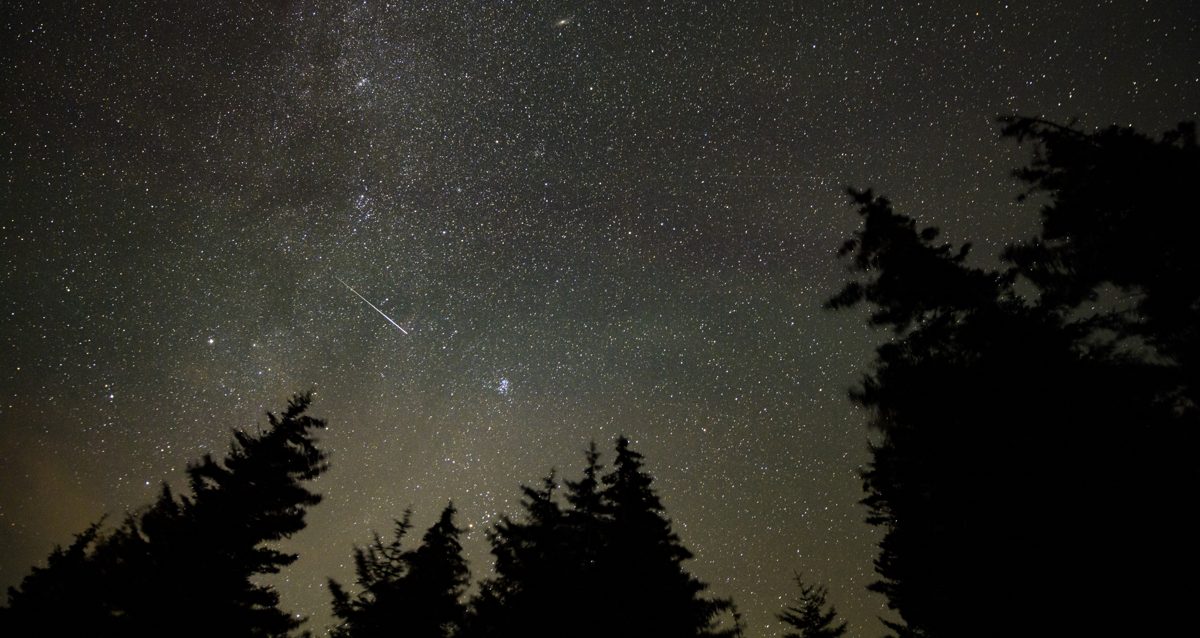
Photo: Perseid Meteor Shower NHQ202108110003 · NASA/Bill Ingalls · NASA media guidelines. U.S. government work; resized and recompressed.