
The coach's challenge ranks tenth because it explains a conspicuous interruption, but relatively little of the uninterrupted action. When a coach signals for a review, the question is not simply whether something looked unfair. NBA Rule 14 defines which called events can be challenged and how the request must be made. The available categories include a personal foul called against the challenging team, certain out-of-bounds decisions that denied it possession, and called goaltending or basket interference, subject to the rule's late-game restrictions. Other replay reviews can begin through officials' procedures rather than a coach's request.
Start by identifying the original call. Imagine a defender touches a ball near the sideline and the referee awards it to the offense. The defending coach thinks the attacker touched it last. That is a different request from asking officials to find an uncalled traveling violation several seconds earlier. A challenge does not open the entire possession to every complaint a team might have. A spectator who understands the review's scope can follow the explanation when officials return, even if the broadcast repeatedly shows a dramatic angle that is not decisive for the actual question.
Reading the sequence
The published rule gives a team one challenge and a second if its first succeeds. Winning the second does not create an endless supply. Timeouts and prompt procedural steps also matter, so a coach is managing an opportunity rather than pressing a universal undo button. In an invented early-quarter example, a marginal possession decision might tempt a coach to challenge. Saving the opportunity for a later call could also be reasonable. That is an editorial description of the choice, not a numerical claim that one strategy always produces more wins or points.
Evidence and certainty are separate. A slow-motion view may make contact easier to see while obscuring how players arrived at the point of contact. Another angle may leave the last touch hidden behind a hand. A viewer should ask what the video actually establishes before treating repetition as proof. The NBA's review framework requires a sufficient basis to change a ruling; an inconclusive replay is not automatically evidence that the original call was perfectly visible. It can mean the available images do not resolve the challenge under the applicable standard.
What to watch next
Out-of-bounds reviews also deserve careful attention because the league's rules allow examination of a proximate foul in the specified circumstances. That does not make every unrelated earlier incident reviewable. The NBA announced that, beginning in 2025–26, the Replay Center official would determine whether that proximate foul should have been called. This detail matters when a review seems to finish with a different explanation from a simple last-touch decision. Consult Rule 14 and the league's announcement together rather than relying on a much older description of the challenge system.
Our viewing exercise is to write a short question before the replay finishes: who last touched the ball, was the challenged contact illegal, or was the called interference correct? Then compare that question with the officials' announced ruling. This habit separates a procedural decision from the emotion surrounding it. A close finish might make challenges feel like the game's most important rule, and that is the strongest case for a higher ranking. We keep them tenth because understanding the possessions that led to the interruption is a more useful foundation for a new viewer.
Source: NBA Rule 14 · 2026–27 official rulebook (PDF) · NBA challenge procedure announcement.
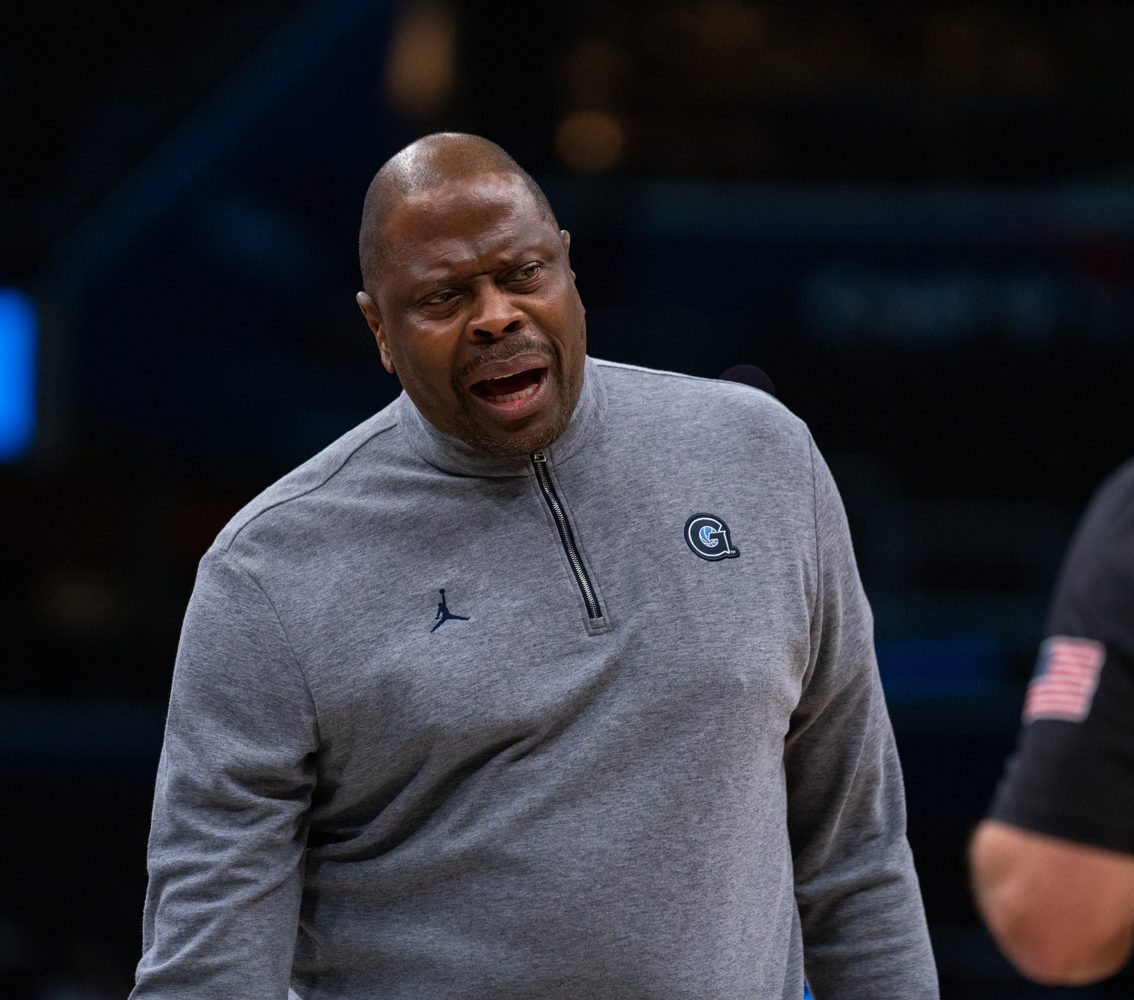
Photo: AlexanderJonesi · CC BY-SA 2.0. Patrick Ewing coaching, 18 December 2021; archive context, not a coach’s-challenge photograph. Optimized local image; resized/recompressed, with any existing source crop retained. No new crop.
