
Goaltending and basket interference rank ninth because they explain why an apparent block or rebound can turn into awarded points or a disallowed basket. NBA Rule 11 protects specific parts of a scoring opportunity. A defender cannot simply wait beside the rim and remove every descending shot. The rule also restricts touching a ball on the rim or within the imaginary cylinder above it, with distinctions and exceptions in the full text. These are related concepts, but a new viewer should resist using goaltending as a label for every illegal touch near the basket.
Consider a hypothetical shot rising toward the hoop. A defender reaches it while the ball is still ascending, outside the protected cylinder and without another prohibited condition. Compare that with touching the same shot on its downward flight while it has a chance to score. The timing and location of the touch change the question. Height and athleticism alone do not decide legality. A spectacular leap can produce a legal block, and a less dramatic touch can violate the rule. Following the ball's flight is therefore more useful than judging how impressive the defender looks.
Reading the sequence
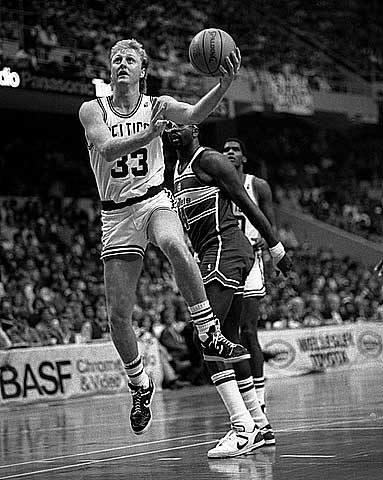
Now shift attention to an offensive rebound. A teammate sees the ball bouncing on the ring and wants to guide it in. The attacking team is also subject to interference restrictions. Being the team that took the original shot does not confer ownership of the cylinder. The spectator's task is to separate a legal put-back after the ball becomes available from a prohibited touch while it remains in a protected position. One still photograph often fails to show that distinction, because it cannot establish the preceding flight or the exact moment of contact.
The tactical consequence is patience under pressure. A defender near the hoop must decide not only whether a ball is reachable, but whether it is legally playable at that moment. An attacker must judge the rebound without simply reaching into the scoring space too early. This is why a player can seem to hesitate beside a ball that is visibly close. Our explanation is a way to read that choice; it is not an instruction to assume that every hesitation proves the player consciously calculated a particular rule. Broadcast images cannot reveal a player's private reasoning.
What to watch next
Penalty direction matters as much as the whistle. Defensive interference can result in points being awarded, while offensive interference can erase a scoring opportunity and give the opponent the ball. The exact administration depends on the situation described by the rule. Watch the referee's signal and the scoreboard rather than assuming that the ball's final position in the net settles the outcome. A basket can appear to have been prevented and still count; another ball can go through and produce no valid score. The protected opportunity, not merely the final image, is central.
For a useful replay exercise, follow three moments: release, the ball's relationship to the rim, and the touch. If the camera angle hides one of them, acknowledge the uncertainty. The NBA Video Rulebook offers moving examples that are better teaching material than an isolated image. Rim protection enthusiasts could reasonably move this topic above sideline procedures, because it changes how they watch interior defense. We place it ninth because the protected conditions arise in a narrower set of situations than the possession and timing principles above it. Learn the distinction first; leave marginal frame-by-frame verdicts to evidence you can actually see.
Source: NBA Rule 11 · 2026–27 official rulebook (PDF).
Photo: Steven Carter from Northern New England, USA · CC BY-SA 2.0. Larry Bird near the basket; archive game date unspecified, not proof of goaltending. Optimized local image; resized/recompressed, with any existing source crop retained. No new crop.
