
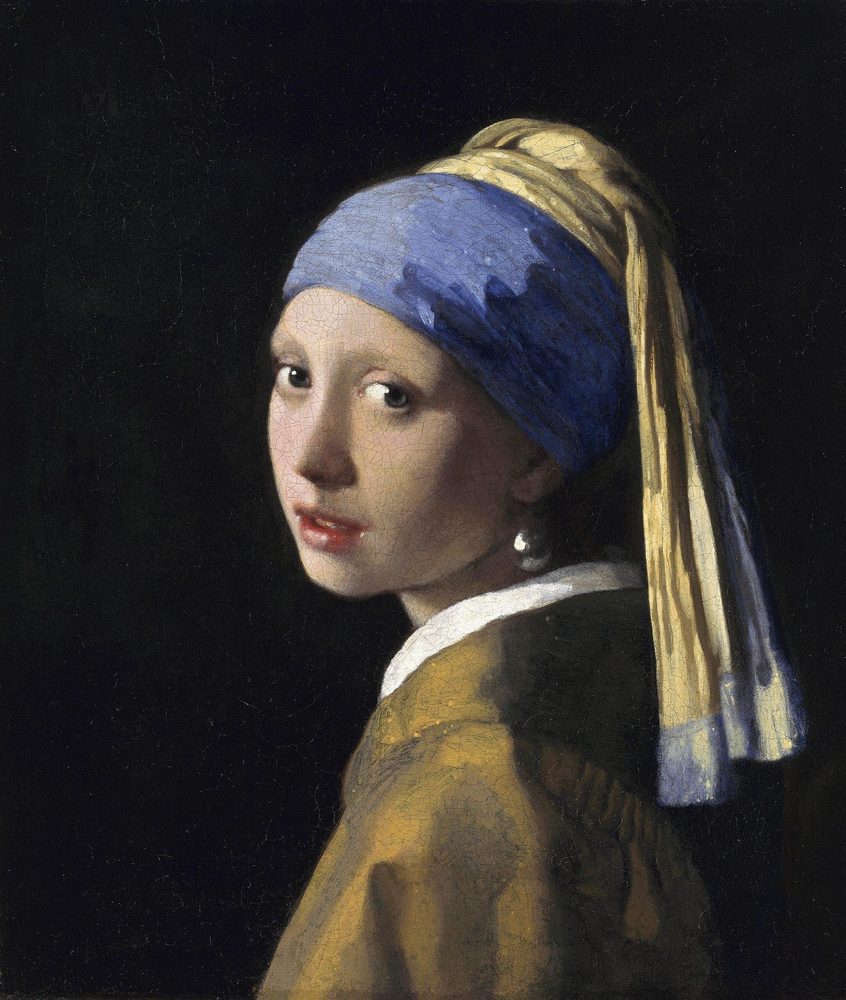
The Mauritshuis in The Hague takes tenth place because its focused encounter with Dutch painting can be powerful without trying to represent every artistic tradition. Its collection includes Vermeer's Girl with a Pearl Earring, dated about 1665, and Carel Fabritius's The Goldfinch, dated 1654. Those two anchors already suggest different ways of paying attention: a face that seems to turn toward us and a small bird that rewards close observation. Their fame makes a practical starting point, but a museum visit should not end when recognition has been satisfied. Ask what the actual painting makes you notice that its name did not.
For the Vermeer, resist turning uncertainty into an invented biography. The museum identifies the picture as a tronie, an imagined character study, rather than a conventional portrait of an identified sitter. That distinction changes the question from guessing someone's secret identity to considering expression, costume and the effect of light. You can have an immediate emotional response without claiming to know what the figure thinks. Try describing what you actually see before reading an interpretation, then notice whether the museum's explanation sharpens or changes that first description. This exercise makes looking active without requiring specialist vocabulary.
Looking beyond recognition
The Goldfinch offers a useful change of pace. A small subject can hold attention through a few decisive marks, and the bird's chain complicates an otherwise ordinary scene. Look at how much information the artist supplies and how much your eye completes. Compare the impression from a comfortable viewing distance with the visible handling you can observe while respecting barriers. The point is not to inspect a painting as though you were its conservator. It is to recognize that a convincing object and a painted surface coexist. That awareness can carry over into larger and more theatrical works elsewhere in the collection.
The strongest case for moving this museum higher is concentration. A traveler who finds vast institutions tiring may remember a focused sequence more clearly than a marathon through celebrated rooms. Build a visit around two or three questions rather than a checklist of names: how faces meet the viewer, how painters render different surfaces or how a domestic subject becomes visually important. The smaller focus encourages returning mentally to earlier pictures. If an unexpected work challenges your assumptions, allow it to become the center of the visit. Editorial rank should never override the possibility of a personal discovery in a quieter corner.
The case for concentration
Our tenth place reflects scope rather than a claim of inferior masterpieces. Compared with the Louvre's varied media or the National Gallery's wider painting survey, the Mauritshuis asks the traveler to value depth within a more concentrated field. That can be exactly the right bargain. It is less suitable as a single substitute for all European art history, and more compelling as an introduction to the pleasures of comparing a tightly connected group. If this subject already matters to you, consider choosing The Hague on its own terms rather than treating it as a quick addition to an overfilled Amsterdam itinerary.
Before going, check the museum's current collection records and visitor information, particularly if a specific picture is your main reason for traveling. An online collection page is evidence of ownership and interpretation, not a permanent promise about display. Leave space after the visit to record one detail you did not know beforehand and one question you still cannot answer. Those notes make a better souvenir of looking than simply reproducing the museum's most familiar image. Would you choose a concentrated visit like this over a larger institution with more periods and media? The answer explains why tenth place can still become a traveler's first choice.
Source: Mauritshuis · Mauritshuis.
Photo: Johannes Vermeer · Public domain. Vermeer, Girl with a Pearl Earring, c. 1665; collection reproduction, not proof of current display. Resized and recompressed without additional cropping; source license/status retained.
