
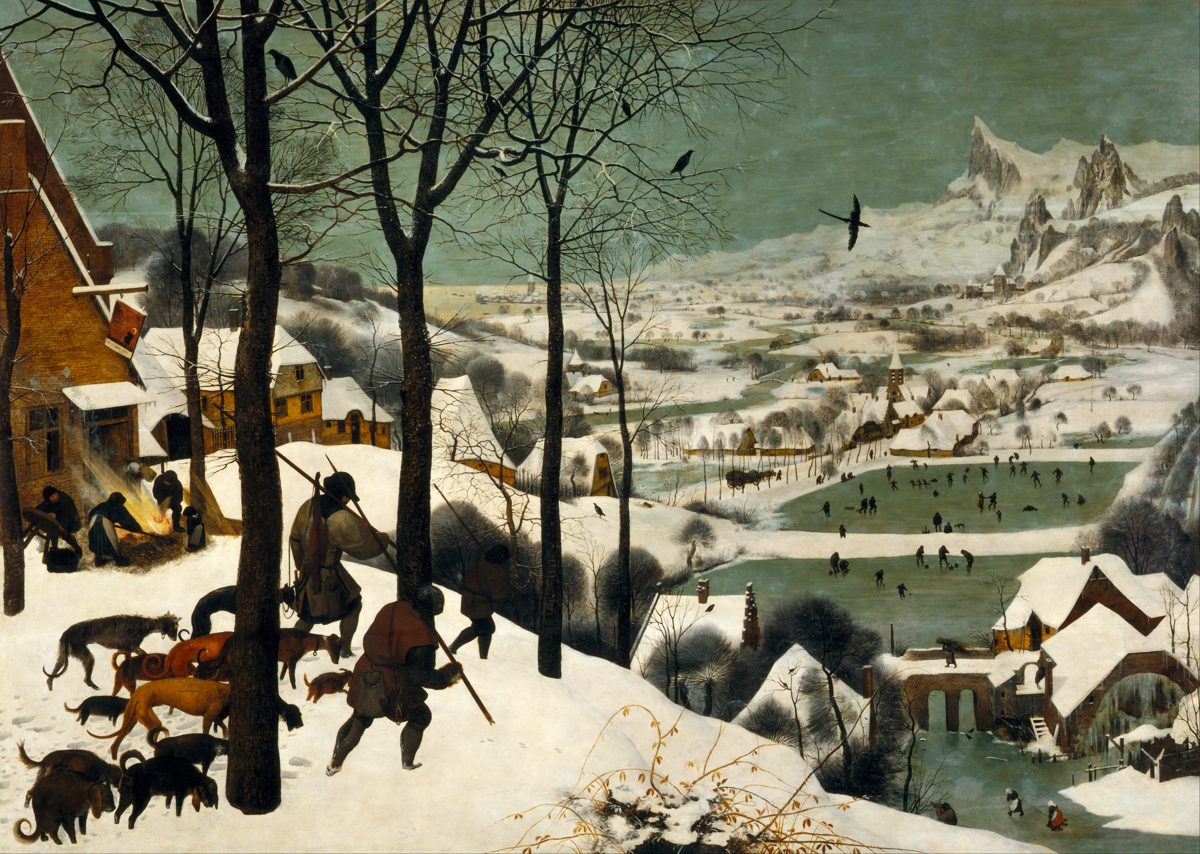
Vienna's Kunsthistorisches Museum occupies sixth place, with an especially strong claim for anyone drawn to Pieter Bruegel the Elder. The museum identifies twelve works by Bruegel as the world's largest collection, including The Tower of Babel, Peasant Wedding and Hunters in the Snow. Its wider Picture Gallery includes artists such as Dürer, Raphael, Rubens, Rembrandt and Vermeer. That combination makes a useful travel proposition: a concentrated reason to come, supported by opportunities to compare beyond one name. Our ranking values both elements while leaving open whether an individual visitor should prioritize the specialist anchor over the broader survey.
Bruegel rewards a change in the speed of looking. Begin with the whole composition before investigating the smaller activities that may pull your attention in different directions. Ask how a distant landscape relates to a nearby figure, or how repeated gestures connect apparently separate groups. Avoid assuming that every detail is a coded message with one certain answer. The museum's explanations can give context without replacing the experience of noticing relationships. You can make a provisional interpretation and revise it after reading. That sequence encourages an active conversation with the picture instead of a hunt for a prewritten list of hidden meanings.
Large compositions, small episodes
Hunters in the Snow offers a particularly clear exercise in moving between scales. First describe the balance of the landscape in plain words. Then identify a small activity or shape that changes how you understand the larger scene. Finally, step back within the permitted space and see whether that detail remains important. The exercise is about visual attention, not proof of what every historical viewer thought. A reproduction can support preparation, but the original's physical presence offers a different relationship between your body and the picture. Do not claim that a screen comparison settles questions of color or conservation that require technical evidence.
The wider collection matters because concentration can otherwise become a tunnel. After a close Bruegel encounter, deliberately choose a work with a different approach to figures or space. Ask what your eye now expects and whether the second painter satisfies that expectation. Such a transition makes a large collection more manageable than following every famous name in order. The point is not to pronounce a winner between artists with different goals. It is to notice how an expectation is formed. That is an especially useful result for a traveler who wants an art museum to change the way they look at buildings, streets and people afterward.
The case for depth
The best argument for moving Vienna higher is depth without dependence on a single globally dominant image. A traveler can arrive with Bruegel as an anchor and still find a different center of interest. We place it just outside the top five because our final choices combine their particular strengths with an especially compelling first-visit identity under this article's criteria. That comparison is close and subjective. A reader devoted to the Old Masters may find the sixth-place decision unconvincing, while someone focused on later art might choose Orsay instead. The value lies in making the reason for disagreement visible rather than hiding it behind numerical scores.
Check the institution's current visitor pages and collection records before fixing a route, especially if one Bruegel painting is essential to your plans. A museum's collection strength should not be confused with a guarantee that every work is displayed without interruption. Leave time after close looking to remember how the large composition and its smaller episodes fitted together. You might describe that relationship without naming the artist at all. If the explanation remains interesting, you have found more than a famous signature. Would the chance to compare several works by one painter outweigh a wider range of periods and media? Vienna makes a persuasive case that it could.
Source: Kunsthistorisches Museum.
Photo: Pieter Bruegel the Elder / Google Art Project · Public domain. Bruegel, Hunters in the Snow, 1565; historical collection reproduction. Resized and recompressed without additional cropping; source license/status retained.
