
If you could build a European trip around only one art museum, would you choose the Louvre's range, the Prado's concentrated painting collection or the Uffizi's Renaissance identity? Our answer is the Louvre, but that judgment needs a defined question. This ranking compares ten museums as destinations for a first substantial encounter with European painting and sculpture. It is not a ranking of every culture's art, an attendance table or a claim that the most famous institution will suit every traveler. A smaller collection can deliver a more satisfying afternoon than a much larger one.
We weigh the importance and variety of the collection most heavily, followed by the strength of a coherent visit and the museum's connection to its city. These are editorial priorities rather than measured scores. The list favors institutions where a visitor can compare approaches, periods or media while still forming a memorable route. That choice disadvantages single-artist museums and rewards some large historical collections. A specialist in Dutch painting, a devoted admirer of Bernini or someone who wants to spend an hour looking slowly could reasonably reverse several positions. We explain those competing cases instead of treating preference as a statistical result.
Criteria and evidence
Research checked on 21 October 2026 uses museum collection records and institutional explanations. Collection membership does not promise that a work will be hanging on your travel date. Loans, conservation, room changes and exceptional closures can alter a visit. Follow each museum's own collection and visitor pages before committing to a route. We deliberately avoid ticket prices, fixed opening hours and claims that a reservation guarantees access to a particular masterpiece. Choose your central interests first, then confirm the practical conditions that affect them. That order prevents a famous name from deciding an expensive itinerary before you know what you want to see.
For demand research, we inspected Google Trends in the United States over the past ninety days, using Web Search and all categories. The initial terms Louvre, Prado and Uffizi produced relative average indices of 41, 55 and 6. Those are normalized interest scores, not monthly search volumes, museum attendance or quality ratings. Prado is an ambiguous term, and the related rising queries included unrelated people and subjects. We therefore use this comparison only as limited evidence of recognizable search language. We do not infer that Americans prefer the Prado museum or that an observed rise proves a news event.
A visit with a question
A useful visit needs a question smaller than the building. Compare how two painters direct your eye, how a sculpture changes as you move or how a familiar reproduction differs from an original's scale. Select a handful of anchors, allow an unexpected work to interrupt the route and stop before looking becomes a race. Our European cities guide offers a broader starting point for fitting museums into a trip. Treat the ranked museums as alternatives to consider, not ten appointments to compress into one holiday. Spending time outside also gives the pictures something to converse with when you return to the street.
The countdown moves from number ten to number one. Smaller institutions retain strong claims because concentration and clarity matter, while the final places reflect the particular balance of breadth, depth and destination value we chose. Neither a higher position nor a famous collection makes your personal response obligatory. If the Prado's painters, the Uffizi's Florence or the Mauritshuis's intimate looking would pull you across a continent, that is useful disagreement with our verdict. Which museum would you put first, and what would you give up to make room for it: breadth, a favorite artist, a quieter pace or a wider mix of media?
Source: Google Trends · Louvre.
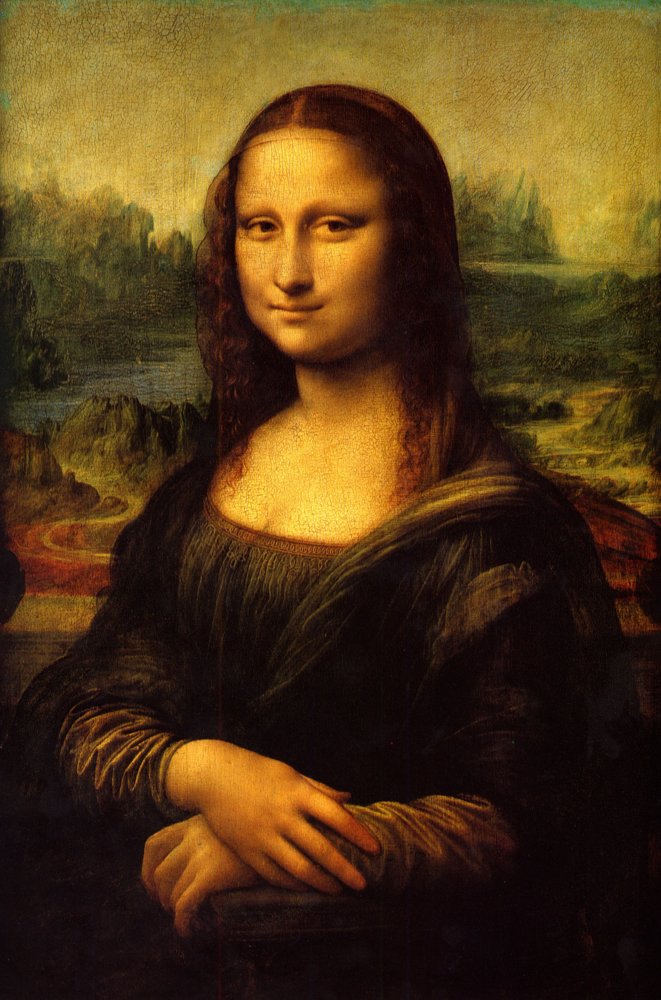
Photo: Leonardo da Vinci · Public domain. Leonardo da Vinci, Mona Lisa, early sixteenth century; collection reproduction, not proof of current access. Existing optimized local image reused unchanged; source license/status retained.
