
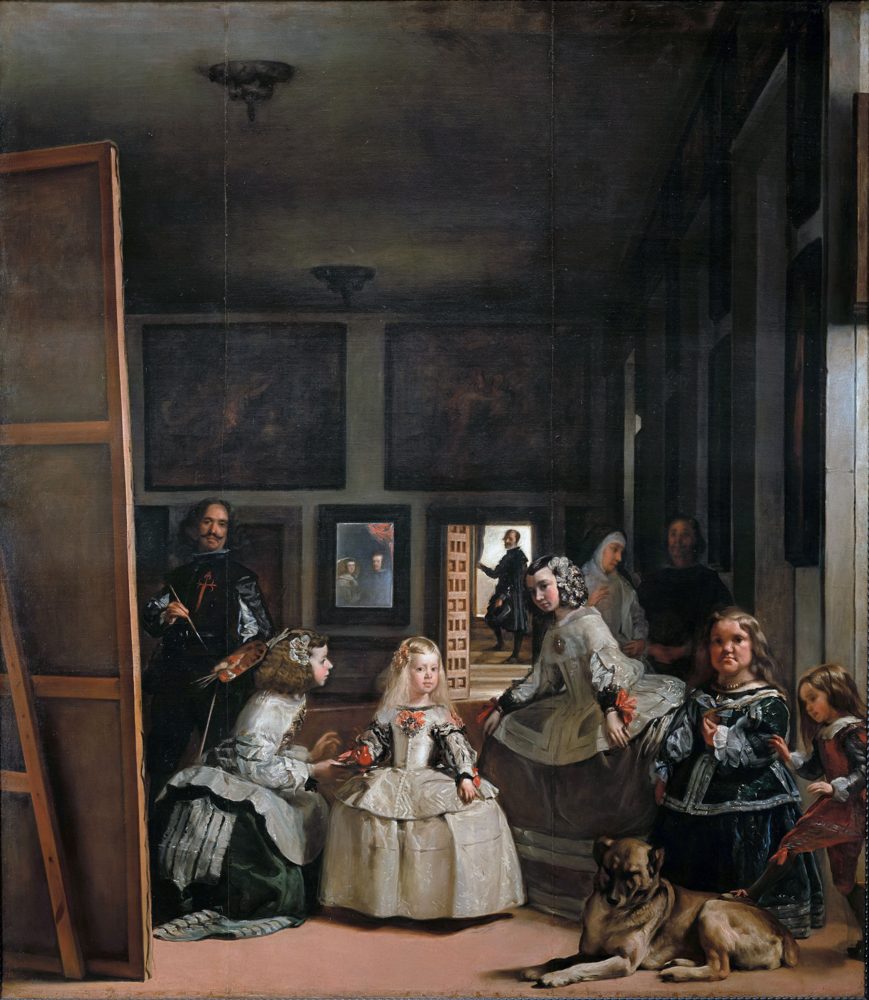
Madrid's Prado takes second place, with a credible argument for first if painting is your overriding interest. The institution describes a collection shaped by unusually deep holdings of major painters, including Velázquez, Goya, Bosch, Titian, El Greco and Rubens. Rather than offering just one representative image per artist, that depth can support comparison within a painter's work as well as between different painters. Our ranking values this opportunity highly. It is a different kind of strength from collecting the widest possible range of media. The Prado's argument is that sustained attention to painting can be broad in thought even when the central medium remains consistent.
A useful first route might ask how painters organize the relationship between the viewer and a represented scene. Where do you appear to stand? Who looks outward, and who seems unaware of your presence? Which parts of the space are offered clearly, and which remain difficult to read? These questions give a visitor a way into complex pictures without requiring immediate mastery of every historical reference. Then use the museum's explanations to anchor interpretation. A visible relationship is a starting observation; a claim about original meaning needs supporting evidence. Keeping those two activities separate makes the experience more rigorous and more enjoyable.
A painting-led route
The depth around major artists is especially useful because it can challenge the idea of a single signature style. Look for differences in purpose, scale or the treatment of a figure rather than assuming that every work by a famous painter is another version of the same achievement. A court image, a religious subject and a scene of ordinary activity ask different questions of their audiences. The comparison should remain grounded in what the collection and object records actually establish. Avoid turning a sequence into a simplified biography in which every change in paint handling directly reveals the artist's emotional state.
The Prado also rewards disagreement among visitors. One person may respond to the controlled relationship between figures and space, another to an unsettling contrast or an extravagant invention. Choose a work each and explain what the other person should notice before giving a verdict. This makes discussion concrete rather than a competition over whose taste is more educated. You do not have to like every painting to learn from the collection. A picture that resists your expectations may be the most useful stop if you can identify what makes the encounter difficult. The goal is an informed response rather than obligatory admiration.
The strongest rival to the Louvre
Our second place gives the Prado's concentration almost as much weight as the Louvre's range. The argument for reversing them is strong: a visitor devoted to European painting may prefer depth around major artists to a museum where different media compete for limited time. We nevertheless choose the Louvre because the question is a first substantial art destination, and comparison across painting, sculpture and other objects gives it an additional advantage. That is an editorial weighting, not an attendance result or expert consensus. It should help you identify which assumption you reject if Madrid would be your clear winner.
Before planning, consult current collection and visitor information, including the status of any work essential to your trip. Do not assume that a deep permanent holding means every desired picture is always on display. Build in a pause after a concentrated sequence rather than using another famous name as a reason to keep walking when attention has faded. At the end, write one sentence explaining how two paintings approach a similar problem differently. If that sentence is more interesting than your original reason for entering, the museum has justified the journey. Should a ranking reward the deepest painting encounter above the widest range of objects? The Prado makes our final choice genuinely contestable.
Source: Museo del Prado.
Photo: Diego Velázquez / Prado in Google Earth; Pixel8tor derivative · Public domain. Velázquez, Las Meninas, 1656–1657; existing color-remastered reproduction, not a technical color reference. Resized and recompressed without additional cropping; source license/status retained.
