
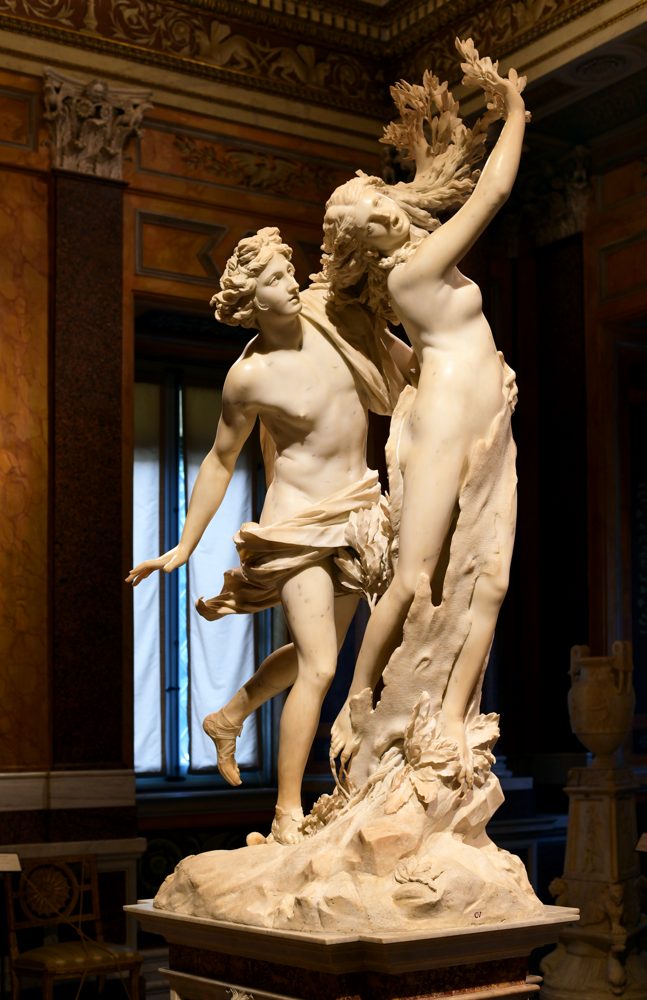
Galleria Borghese in Rome ranks ninth because the relationship between sculpture and its surrounding rooms makes an unusually strong case for traveling to see originals. Bernini's Apollo and Daphne, made between 1622 and 1625, is a central anchor. The museum connects the sculpture with the room's decorative treatment of the same myth. This is more than a chance to identify a famous marble group. It is an opportunity to think about how an artwork occupies a setting, and how a setting directs our interpretation of the work. A photograph can introduce that relationship, but it cannot give the visitor every change of viewpoint.
Start with the boundary between human form and transformation. The myth supplies a narrative of pursuit and metamorphosis, but you need not reduce the sculpture to a neatly illustrated plot. Notice where the figures appear to move, where the material seems delicate and where your own position changes the visible relationships. Do not invent a single obligatory viewing point or imply that every angle was originally equivalent. Instead, compare what each permitted position reveals and conceals. This approach gives movement a purpose: the visitor is testing an observation, not circling an object merely to accumulate more photographs.
Sculpture and setting
The room itself provides another subject. Looking upward and outward can interrupt the habit of treating art as isolated images against neutral backgrounds. Ask whether the decoration reinforces the sculpture's story, makes the space feel theatrical or competes with the central group. Those are interpretive questions rather than measurements of how visitors must react. The museum's account supplies historical grounding; your task is to notice which parts of that relationship remain visible to you. Keep the distinction between documented changes in an arrangement and your impression of its effect. Both can enrich a visit without being confused with each other.
Borghese's strongest claim to a much higher rank is the intensity of sculptural looking. For someone whose usual museum experience is dominated by paintings on screens, a convincing encounter with a three-dimensional work can reorganize expectations. Consider how a surface catches light or how an apparent gesture depends on support and balance. Respect boundaries and other visitors rather than trying to recreate a dramatic internet photograph. The aim is sustained attention, not the possession of a perfect angle. A shorter route built around one well-understood object can be more valuable than an ambitious itinerary that never allows a question to develop.
Intensity versus breadth
Why only ninth? This ranking favors broad opportunities to compare across periods and approaches, whereas the argument for Borghese is especially strong around a particular relationship between collection, sculpture and setting. That makes it a superb destination for some interests and a less comprehensive starting point for others. A traveler primarily interested in modern painting would be choosing a different question altogether. Likewise, the Louvre's range is not automatically a better answer for someone fascinated by Bernini. Our position acknowledges the trade-off rather than claiming that breadth can objectively defeat an intense encounter with a single artist's work.
Plan from the institution's current visitor information and collection pages, not assumptions about entry arrangements or unlimited time inside. If a sculpture is essential to your trip, verify the relevant display information before booking. Pair the visit with time to absorb what you saw instead of immediately competing with another major collection. Later, sketch the basic relationship between the figures from memory, however roughly, or describe which detail changed when you moved. That exercise tests what you actually noticed. Would you rank a museum higher for one remarkable encounter than for the number of historical periods it can represent? Borghese makes that disagreement especially productive.
Source: Galleria Borghese · Galleria Borghese.
Photo: Architas · CC BY-SA 4.0. Bernini, Apollo and Daphne; photograph by Architas, 1 June 2018, not a current room-access guarantee. Resized and recompressed without additional cropping; source license/status retained.
