
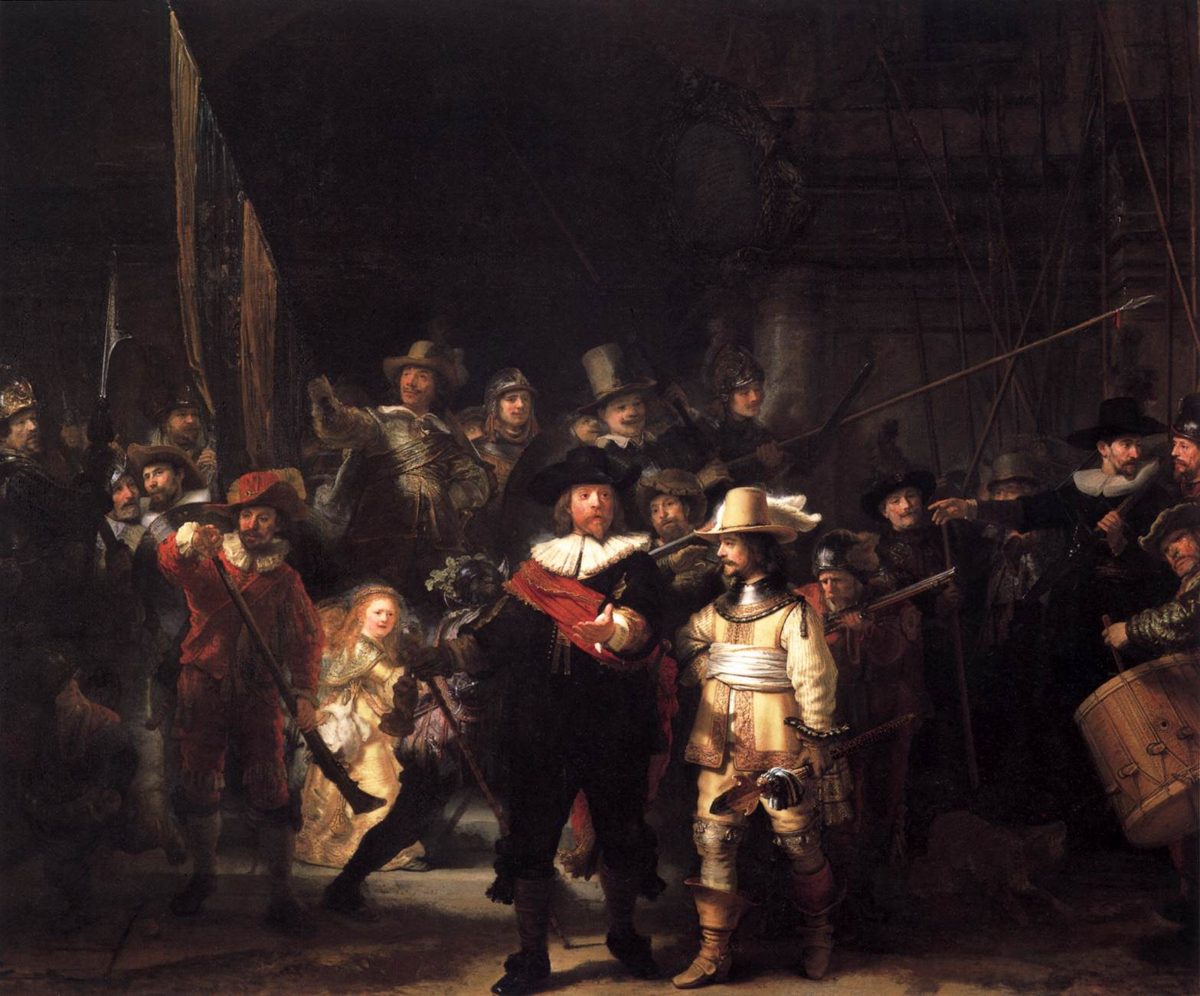
Amsterdam's Rijksmuseum takes fifth place for connecting a strong painting destination with a broader encounter with Dutch art and history. Its visitor information identifies Rembrandt's The Night Watch and Vermeer's The Milkmaid as major collection anchors. These familiar works give visitors an accessible starting point, but the most useful question is what happens between them. A large group composition and a concentrated domestic scene invite different kinds of attention. Comparing the scale, arrangement and direction of light can make the visit more coherent than simply seeking two famous paintings and treating everything else as the corridor between them.
Approach The Night Watch by considering how a group becomes a composition. Notice where the eye goes first, which figures seem to advance and how apparent action is organized. You need not know every name to understand that the picture distributes attention unevenly. Then use institutional interpretation to connect that visible arrangement with the work's historical context. Avoid confusing dramatic movement with a literal record of a single instant. A painting is a constructed image, and noticing construction does not reduce its power. It helps explain why the scene continues to hold attention beyond the recognition of its title.
Two different kinds of attention
The Milkmaid offers a deliberate contrast in the scale of the encounter. A familiar activity can become visually absorbing through relationships among forms, surfaces and light. Try describing what makes an ordinary action seem sustained rather than hurried. Then compare the effect with the group energy you have just considered elsewhere. This is an exercise in response, not a claim that both artists intended the same message. Distinct works can illuminate each other without being reduced to a single national character. A museum of Dutch art and history should open questions about different lives and representations, not encourage a stereotype that explains every object too easily.
Give the material beyond the most familiar paintings a role in your route. Choose an object or image you would not normally seek and ask what sort of historical question it raises. Who might have used it, encountered it or paid for it? Look for the institution's explanation before drawing a sweeping conclusion. That shift can prevent a visit from becoming a contest among canonical artists. It also makes the collection's national framing something to examine rather than passively accept. What is emphasized, what is difficult to represent and whose perspective might still need further reading are worthwhile questions even on an introductory visit.
Painting and historical context
The strongest argument for placing the Rijksmuseum higher is the combination of recognizable anchors and a larger historical frame. A traveler can begin with art and leave thinking about how objects construct a picture of a society. We keep it fifth because our upper places give greater weight to particular strengths in the European painting survey and, at the top, the Louvre's cross-media range. The choice is close rather than measurable. If your primary interest is Dutch art, this museum or the Mauritshuis may deserve first place. The ranking should help articulate that preference instead of making you travel against your own curiosity.
Check the museum's current visitor and collection information before going. Conservation projects and display arrangements can affect how a celebrated work is encountered, so do not assume that an older photograph describes your future view. Allow time to pause after a major painting rather than immediately moving toward the next landmark. Before leaving, connect one famous work with one less familiar object in your own words. If the connection makes you want to read more about Dutch history or painting, the museum has supplied a lasting route beyond the building. Would that combination of art and historical context outweigh the more concentrated strengths of the museums above it?
Source: Rijksmuseum · Rijksmuseum.
Photo: Rembrandt / Web Gallery of Art · Public domain. Rembrandt, The Night Watch, 1642; collection reproduction, not a current conservation or display view. Resized and recompressed without additional cropping; source license/status retained.
