
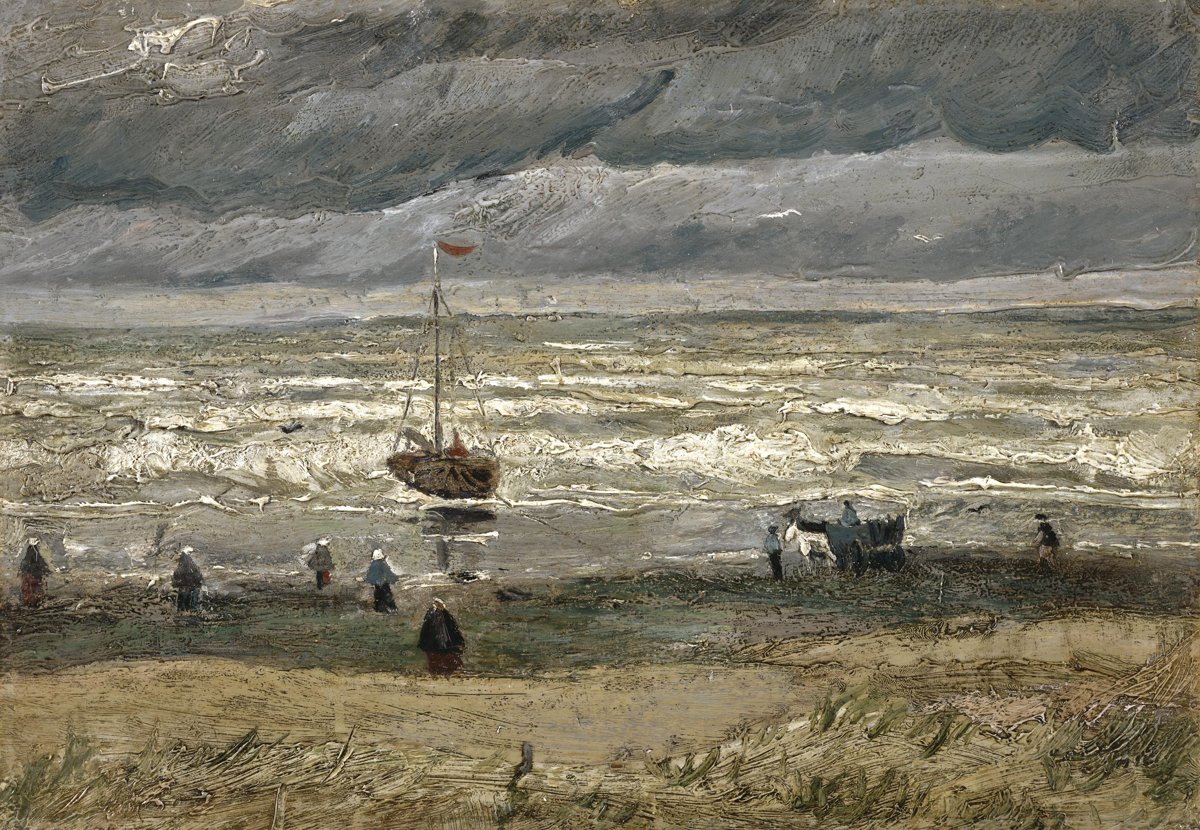
Amsterdam's Van Gogh Museum takes eighth place because a focused collection can reveal artistic change with unusual clarity. The museum's records include The Potato Eaters from 1885, The Bedroom from 1888, Sunflowers from 1889 and Almond Blossom from 1890. Those dates give a starting framework without turning a career into a simple march toward a final style. Our ranking rewards the opportunity to compare choices across works. It does not assume that every listed picture will be available on a particular visit or that knowing an artist's biography is the same thing as understanding a painting.
A productive first question concerns color relationships rather than famous individual colors. Ask how one area makes another seem brighter, quieter, closer or more distant. Then consider the direction of the marks and the way a surface suggests movement or stability. You do not need to identify pigments or claim technical expertise to notice a repeated shape. Compare your initial impression with an institutional explanation only after giving the work a little time. This preserves room for your own observation while allowing scholarship to correct an assumption. The museum becomes a place to revise a first response rather than merely confirm an image already stored on your phone.
Comparing choices
The artist's fame can be both an invitation and an obstacle. Familiarity may encourage visitors to look for a recognizable motif and move on before considering the decisions that made it compelling. Choose two works that seem different and describe the difference without using the words beautiful or sad. That constraint often produces more specific attention to composition, space and handling. Avoid treating every visual feature as a symptom or using a tragic biography as a universal explanation. A painting deserves discussion as a made object, with choices and pictorial problems, even when the maker's life remains an important part of its historical context.
A single-artist museum also invites a useful challenge to the idea of a masterpiece. An unfamiliar work may explain an experiment more clearly than the picture you traveled to recognize. Let a lesser-known object become a link between two better-known ones. Ask what stayed consistent and what changed, while avoiding a rigid story in which later always means better. The collection can support several routes through a career rather than one emotional script. If you are visiting with someone else, compare one observation each before reading longer interpretation. Different starting points can make a focused museum feel broader than its artist-centered title suggests.
The case for a single artist
The strongest argument for a higher position is this capacity for depth. Someone who wants to understand one painter's development may find it more valuable than surveying several centuries in a single afternoon. We place it below broader collections because our first-encounter question gives more weight to comparing multiple artists, media and historical settings. That is a limitation of our criteria, not a weakness that a museum needs to apologize for. It also explains why combining the Van Gogh Museum with the Rijksmuseum can be intellectually useful, provided your itinerary leaves enough energy for each rather than treating proximity as an obligation to do both at once.
Use the museum's current collection and visitor pages to check display, reservations and practical access. Do not build your entire experience around a promise that every familiar image will be in the room. Before leaving, return mentally to the first work you considered: has the later comparison changed how you would describe it? Write down one specific visual relationship rather than a general verdict on the artist's genius. That habit gives the visit a lasting result without requiring you to adopt someone else's taste. If a focused career study matters more to you than a broad survey, eighth place may be the most disputable position in this countdown.
Source: Van Gogh Museum · Van Gogh Museum.
Photo: Vincent van Gogh · Public domain. Van Gogh, View of the Sea at Scheveningen, 1882; historical collection reproduction. Existing optimized local image reused unchanged; source license/status retained.
