
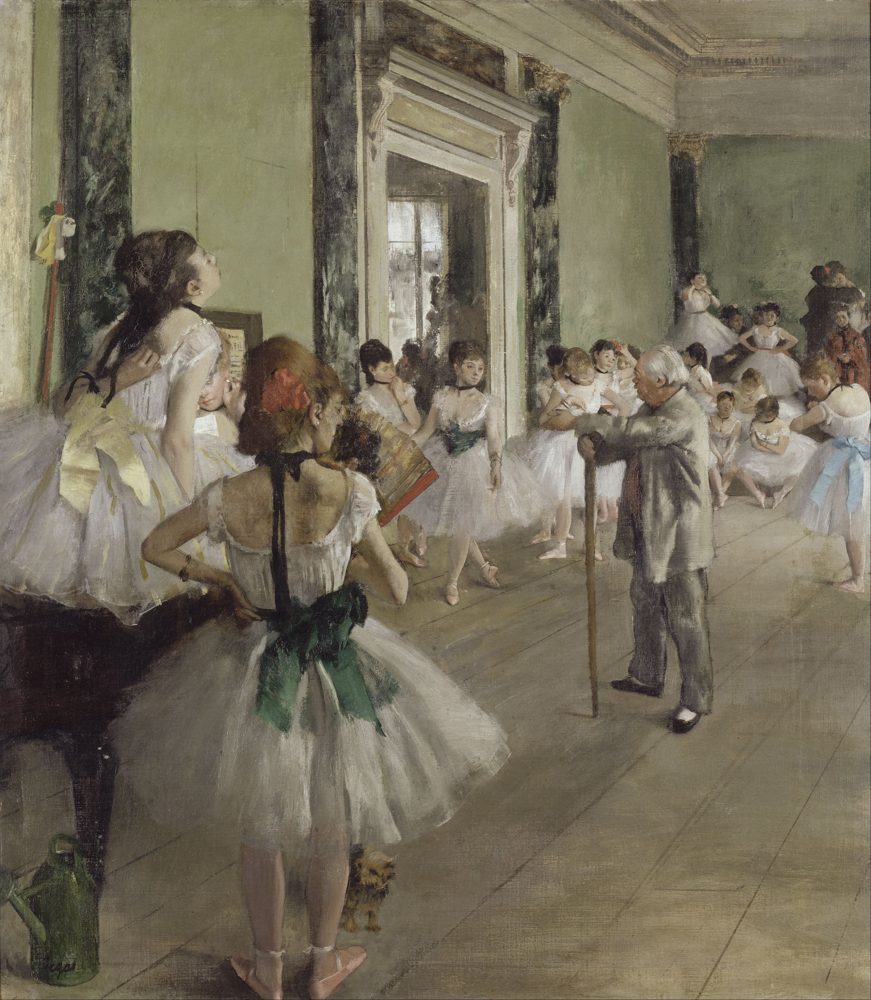
Paris's Musée d'Orsay ranks fourth because its focus makes a major transition in art unusually approachable. France's Ministry of Culture describes its scope as the decades between 1848 and 1914, and the museum occupies a former railway station. That historical frame provides a different proposition from the Louvre's much broader range. Instead of asking a visitor to sample widely separated worlds, it invites attention to change within a more concentrated period. Our ranking rewards that coherence. It does not suggest that every artist in those decades worked toward a single goal, or that later art simply corrected what earlier art got wrong.
Begin with a question about what a picture asks you to notice. Does it emphasize a figure's pose, the arrangement of a public place, the effect of light or the activity of the painted surface? A focused historical frame lets differences become more visible because the comparison is not constantly jumping across many centuries. Avoid forcing every work into a familiar movement label before looking at it. Labels are helpful tools, but they can become shortcuts that prevent attention. Describe one visible decision first, then use the museum's interpretation to understand how that decision belongs to a larger artistic and social conversation.
A focused historical frame
The station building is part of the destination's distinctive experience, but architecture should not swallow the collection. Look at the relationship between a large interior and the smaller scale of an individual artwork. Notice whether the building changes your pace or expectations. That is your response, not a universal fact about what every visitor feels. A museum can be memorable because its setting and collection remain in productive tension rather than matching perfectly. Photographs may tempt you to seek a single famous view. Let that be one moment in the visit instead of the measure by which all the rooms must compete.
Orsay's strongest case for first place is that concentration can be a form of generosity. A traveler who wants to understand changes in painting may find a defined period easier to think through than a broad historical encyclopedia. Choose two works that seem to disagree about how to represent the world and ask what the disagreement consists of. It may concern finish, subject, scale or where the viewer appears to stand. Keep your answer provisional and anchored in what you can see. The museum then becomes a place to practice interpretation rather than a test of whether you can recognize a sequence of famous styles.
Why concentration can win
We place it fourth because our top three offer a different balance of major painting depth, a distinctive city connection and, for the Louvre, greater variety across media. That decision is openly debatable. Someone especially interested in the nineteenth century might reasonably put Orsay above all of them. Conversely, a traveler fascinated by sculpture from earlier periods may choose a different destination. The useful comparison is between the kinds of looking each museum supports, not an imaginary universal scale of excellence. Your existing interests should influence the route, but a strong visit can also introduce a question you did not know you had.
Consult the museum's current collection and visitor information before planning around an individual work. Permanent collection does not mean uninterrupted display, and this article does not promise specific room arrangements or temporary exhibitions. Leave some space in the day after your visit: a city scene may look different after considering how painters frame ordinary movement. Record the connection as your own observation rather than attributing it to an artist without evidence. If a clear historical focus allows you to remember more and compare more confidently, why should a larger collection automatically win? That is the serious challenge Orsay presents to the three museums ranked above it.
Source: Musée d’Orsay · Ministère de la Culture.
Photo: Edgar Degas / Google Art Project · Public domain. Degas, The Ballet Class, 1870s; historical collection reproduction. Resized and recompressed without additional cropping; source license/status retained.
