
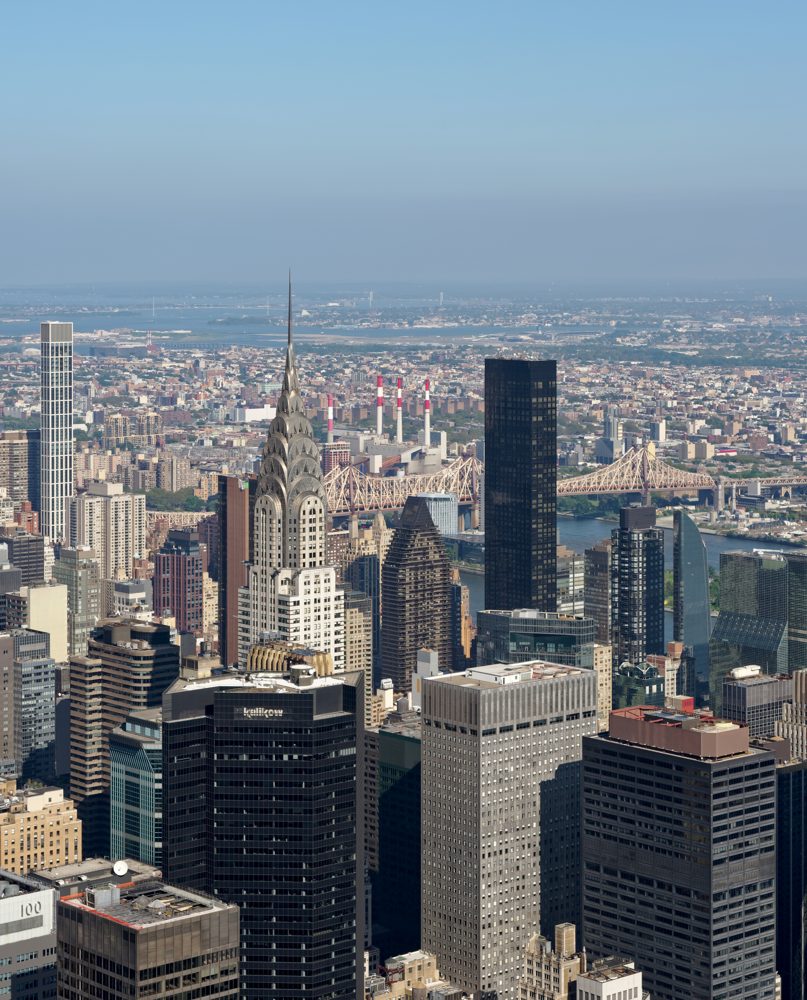
Which American Art Deco building deserves first place: the Chrysler Building, the Empire State Building, or a landmark whose best qualities emerge only when you step closer? The question becomes more interesting when height stops deciding the answer. A skyline photograph can make the tallest tower seem inevitable, yet an entrance, a colored facade or an entire theater interior may express the style more completely. Our ranking compares ten United States buildings as architectural compositions. It favors a distinctive overall form, the integration of materials and ornament, and the way design creates an experience at more than one scale. These priorities put Chrysler first, but they also give its rivals strong arguments.
This is an editorial selection researched on 23 October 2026, rather than a measured league table or a vote by visitors. The ten places belong to the historic American Art Deco story, including office towers, civic buildings and a theater. Their different uses matter: a banking hall does not solve the same problem as a municipal tower, and an auditorium should not be judged only by its exterior. We compare how convincingly each building develops its own architectural idea. We do not award points for the price of a ticket, the height of an observation platform or the number of social-media photographs. Nor does a low position imply that a landmark is unimportant.
Our central debate is deliberately close. Empire State has an exceptionally clear massing and a powerful relationship with the Manhattan skyline. Chrysler answers with a more particular combination of crown, metalwork and imagery associated with the motor age. We prefer the latter because its ornament helps define the identity of the whole rather than merely dressing a familiar office tower. A reader who values disciplined proportion above expressive invention can reasonably reverse the pair. Farther down the list, Guardian makes a strong case for putting color and craft ahead of the theatrical space of Radio City. The reasons for those choices matter more than a false appearance of numerical precision.
A useful way to read the countdown is to alternate between three distances. From far away, examine the outline and the balance between the main mass and its top. Closer in, follow the repeated windows and the changes in the facade. At the entrance, ask how materials and details help a person understand where to approach and what kind of place lies beyond. This method does not require agreement about a single perfect definition of Art Deco. It does require distinguishing what an image visibly shows from a historical claim that needs a source. Our photographs identify the buildings; they do not certify that a lobby, roof or theater is open today.
Access is especially important at Eastern Columbia, which is a private residential building. Respect residents, working offices and security requirements throughout the list. Exterior appreciation from an ordinary public place can be enough; do not assume that a historically important interior is available without permission. If you plan a visit, consult the operator's current information rather than treating this ranking as a booking guide. Restoration, event schedules and temporary restrictions can change what is visible. The selection is intended to improve architectural comparison, not to send readers through restricted doors or promise a particular touring experience.
The result spans several American cities without pretending to be exhaustive or geographically balanced. New York's famous rivals remain central, but Detroit, Los Angeles, Chicago, Buffalo, Baton Rouge and Syracuse show why the discussion should extend beyond one skyline. Related Topnilo guides to architectural features and Chicago buildings offer useful vocabulary and local comparisons. Read the countdown as an argument you can test: do the most memorable Art Deco buildings win through silhouette, material richness, spatial drama or some combination of the three? By the final entry, you may have a different winner, but you should also have clearer reasons for choosing it.
Source: Architectural record 1 · Architectural record 2 · Architectural record 3.
Photo: Jakub Hałun · CC BY 4.0. Chrysler Building viewed from Empire State, 1 October 2023. Historical photograph; current access and conditions may differ. Resized/recompressed, source framing retained; original license or dedication retained. No endorsement.
